Get Full Government Meeting Transcripts, Videos, & Alerts Forever!
Get email alerts on the Public Safety Library topic
No spam. Unsubscribe anytime.
Library staff begin using Savannah incident‑tracking system to log patron behavior and staff well‑being
Summary
South Pasadena library staff demonstrated a new incident‑tracking platform to trustees on Sept. 11, describing how the system will standardize reports, link repeat incidents and log staff time and well‑being concerns.
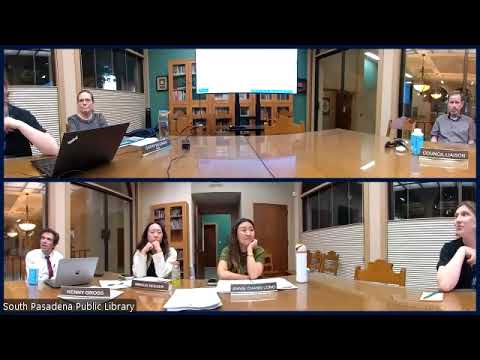
South Pasadena library staff demonstrated the Savannah incident‑tracking and reporting platform to the Library Board of Trustees on Sept. 11, showing how the system will standardize incident descriptions, link repeat incidents to an individual and record staff time spent managing events. The demonstration followed board approval of the Aug. 14 minutes earlier in the meeting. The demonstration was led by Olivia, a library staff member who has taken lead on implementing the platform. "Every individual staff member has a login. There's no limit or cost associated," Olivia said, describing how the system records which staff member submitted each report. The board heard that the city now pays the annual licensing fee and that Olivia and colleagues have used remaining consulting hours from the vendor to configure features such as incident categories and trigger notifications. The software organizes reports into types—behavioral, medical, unsupervised children and staff well‑being—requires certain objective fields and permits supervisors to edit submitted entries. Olivia said the system includes a "notable occurrence" category for behavior that does not currently violate the code of conduct but could indicate later escalation. She gave an example: a patron who repeatedly hovered near the front desk, damaged multiple small pairs of scissors and made staff uncomfortable; staff documented the pattern so later incidents can be linked. Olivia said staff can link incidents by description or by adding an ID to represent a recurring, unnamed patron, and that the system can attach security‑camera stills when available. The platform also records whether police or a security guard responded and logs time staff spent addressing each incident, a field intended to support cost and staffing discussions. "If you spend an hour dealing with one patron, that's what it's costing the city," Olivia said. Staff well‑being reports are available as a private form visible only to supervisors; Olivia said the form lets employees request follow‑up from HR or a supervisor after a stressful incident. The board discussed who may edit reports and how edits are documented. Olivia said only full‑time staff or supervisors can edit submitted reports; all edits are logged with initials and time stamps. The board asked about searchability and analytics. Olivia said users can keyword search or use an ID to pull an individual patron's linked incidents; she said the vendor's analytics can filter by time of day, location in the library and whether a security guard was on duty. The board also asked about future features: Olivia said the team plans to import backlog records (2022–2024 and partial 2025 are in progress), add a template to auto‑generate ban letters tied to recorded code‑of‑conduct violations and use trigger notifications to alert police or HR on specified incident types. No formal board action was required to adopt the software; trustees were briefed on the implementation status, data fields, supervision and planned next steps for backlog import and analytics reporting. The demonstration concluded and the meeting proceeded to the community‑center planning update.