Get Full Government Meeting Transcripts, Videos, & Alerts Forever!
Get email alerts on the Urban Renewal Grant Program topic
No spam. Unsubscribe anytime.
Advisory committee backs keeping $100,000 cap and 50% match while revising urban renewal grant rules
Summary
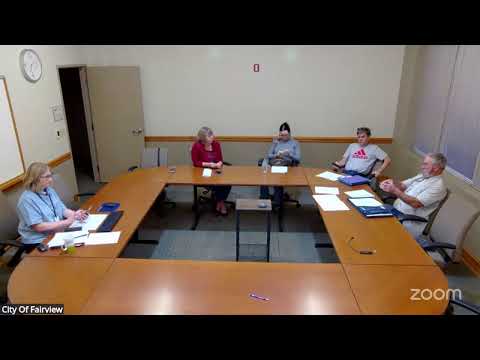
Fairview's Economic Development Advisory Committee reviewed proposed revisions to the urban renewal grant program, supporting a $100,000 maximum with up to a 50% city match and a new split between tenant improvements and development assistance.
Fairview's Economic Development Advisory Committee spent the meeting reviewing proposed revisions to the city's urban renewal grant program, and members generally supported keeping a $100,000 maximum award with the city covering up to 50% of an approved project while creating separate application tracks for tenant improvements and for work that advances new development. Staff said the changes aim to make the program more predictable and easier for applicants to use.
The changes under consideration would separate the current, broad grant program into two distinct categories: one tailored to tenant improvements (TI) intended to ready vacant commercial spaces for immediate occupancy, and a second aimed at larger, site-level development activities such as lot consolidation, environmental assessment or infrastructure work. "The urban renewal agency board did end up approving the grant," said Staff member (presenter), describing a recent approval for a photography studio at Market Village apartments and why staff proposed a pause and recalibration of the guidelines.
Committee members and local property owners argued the practical difference between a straightforward TI and a "vanilla shell" build-out is significant: typical TIs were described as running in the tens of thousands of dollars, while complete build-outs can require hundreds of thousands. The group generally favored keeping a clear distinction so the program can be more user-friendly for small operators while still enabling support for larger, strategic redevelopment projects.
On funding levels, staff reiterated the recommended parameters the committee discussed: the city would contribute up to 50% of a project's cost, with a $100,000 program maximum. "Right now, the board has to approve any application that's more than $20,000, and we're not proposing to change that," Staff member (presenter) said, noting that the urban renewal board retains discretion to adjust category allocations and to review budgets submitted with applications.
Members debated whether to itemize allowable and ineligible expenses (for example, specifying that HVAC or restroom plumbing be landlord responsibilities). After extended discussion, committee members expressed concern that strict lists could complicate project budgets and administration; several favored leaving flexibility for the board to review proposed budgets against the $100,000 cap. One local developer who submitted written comments recommended allowing a larger portion for engineering, permitting and design so applicants could use the award more predictably toward total project costs.
The committee also discussed eligibility rules. Staff recommended not narrowing eligible business types at this time, arguing the market is tight and the city should be flexible about retail, personal services and other tenant types. Staff suggested maintaining a restriction on national chains but consider loosening the current local-franchise cutoff from five locations to a higher threshold (for example, up to 10) to allow some regional operators to qualify.
Geography was another focus. Staff recommended concentrating the program on the core commercial area —Fairview Village and the Halsey Corridor—rather than the whole urban renewal boundary, and committee members generally supported that approach to prioritize filling vacant storefronts where activity is already concentrated.
Staff outlined the near-term schedule: the city intends to present revised program parameters to the urban renewal board at its meeting next Wednesday and to return to the City Council with a draft set of program guidelines in mid-October. "We're asking council for direction and then the idea is to come back Oct. 15, and with a draft set up the program parameters for them to adopt," Staff member (presenter) said. The committee tentatively agreed to meet again in early October to review the draft before it goes to council.
No formal change to the program was adopted at the meeting; committee members provided feedback that staff will carry to the urban renewal board and to the council when the revised guidelines are drafted. The discussion repeatedly emphasized predictability for applicants, retaining board oversight for projects above staff approval thresholds, and prioritizing funds where they can most quickly activate vacant commercial space in Fairview Village and along Halsey Street.
Additional items at the meeting included a brief procedural motion to accept minutes from July 10 (moved during the meeting) and a review of written feedback from local developers, including a letter from Garth Everhart describing rent and appraisal pressures and urging targeted incentives in the village core.
Next steps: staff will present the proposed guideline revisions to the urban renewal board next Wednesday and bring a draft program to council in mid-October; the advisory committee plans a follow-up meeting to review the draft in advance.