Get Full Government Meeting Transcripts, Videos, & Alerts Forever!
Get email alerts on the Budget Fiscal Policy topic
No spam. Unsubscribe anytime.
Jackson County Board of Education adopts FY‑26 budget after second public hearing
Summary
After a second public budget hearing, the Jackson County Board of Education adopted a $91.98 million FY‑26 budget, citing timing of federal grants, rising benefit costs and a projected ending fund balance of roughly $28.7 million.
The Jackson County Board of Education on Monday adopted its fiscal year 2026 budget after a second public hearing that reviewed enrollment, state and federal funding changes, and projected capital outlays. The board approved a $91,980,000 expenditure plan and a revenue projection of about $80,300,000, leaving a projected ending fund balance of approximately $28,700,000. "We project our ending fund balance is gonna be 28,700,000," the presenter said during the hearing.
The hearing, presented by a district staff member identified in the meeting as Buffy, explained why the state-required public hearings are held and summarized the budget packet available to the public. The presentation emphasized that enrollment, salary and benefits, and aging facilities are the principal factors driving the budget. "There are numerous factors that affect our budget. The top being enrollment," Buffy said.
Why it matters: the budget sets pay schedules, staffing projections and capital spending for the year. Board members approved salary schedules and the overall budget during the meeting, moves that finalize pay and staffing assumptions tied to the district's revenue estimates.
Key figures presented at the hearing included a projected 437 certified positions funded in FY‑26 and a districtwide total of about 795.66 units (all position types and funding sources). Salary and benefits were listed as 62.73% of the general fund and special revenue fund. The presenter said payroll increased by about $905,000 over last year (attributed to step raises and added positions) and benefits rose by $1,460,000 due to higher PHIP health insurance contributions and an increase in retirement system rates. "Since 02/2017, the district has paid $800 a month per employee for PHIP health insurance. It went up this year to $904 per month per employee," Buffy said.
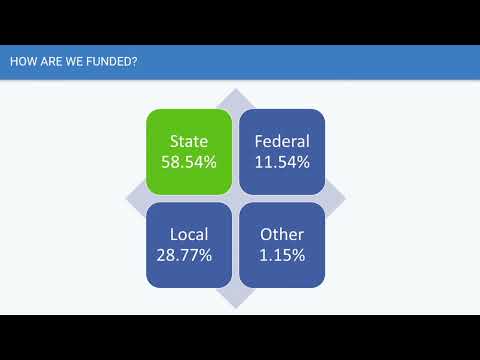
State funding remains the district's largest revenue source, projected at about $47,000,000 and representing 58.54% of the budget. The presenter discussed the recently adopted state-level RAISE Act and said it will change how some student-population funding is allocated and reported; the district expects new accountability and reporting requirements as the program is phased in. The presenter also noted timing differences on federal grant receipts that affected the comparative presentation from the prior year: some federal funds were received early this year and therefore appear larger in the FY‑26 presentation, while other awards already received (such as advancement in technology funds) were recorded in the beginning fund balance rather than FY‑26 revenues.
The presentation included the district's projected revenues by source: state (largest), local, federal, and other. Local revenues were projected at about $23,100,000 (28.77% of the budget) and the "other" category at about $925,226 (1.15%), which includes Medicaid reimbursement, E‑rate funding and miscellaneous grants. The presenter said projected FY‑26 revenues are about 1.7% above last year when considered conservatively.
On expenditures, instructional functions (instruction and related supports) account for nearly half the budget, while capital outlay increased primarily because of the planned Skyline project. The presenter described bond and debt service status, noting an outstanding QSCB bond payment of roughly $1,350,000 due in 2026 and that the district has been making escrow payments to cover that obligation.
Discussion and next steps: board members asked questions and thanked staff for the presentation. The board then voted to adopt the salary schedules and approve the FY‑26 budget. No motions to amend the budget were recorded during the meeting. The presenter invited public comments by submitting a budget comment form included in the back of the packet.
Ending note: the district will post approved salary schedules on its website and continue to monitor state Education Trust Fund developments, federal grant timing, and local economic indicators.