Get Full Government Meeting Transcripts, Videos, & Alerts Forever!
Get email alerts on the Land Use Event Center topic
No spam. Unsubscribe anytime.
Planning commission removes west‑side screening requirement for Smart House Way event center
Summary
The Planning Commission approved amendments to a previously permitted event center at Smart House Way, removing a required west‑side screening adjacent to a railroad and approving other site‑plan adjustments, after discussion of dumpster location, screening materials and fence/landscaping options.
Chairman White and the North Little Rock Planning Commission voted unanimously to approve amendments to a previously permitted event center at 112 Smart House Way, approving a site plan change and removing a condition requiring screening along the development’s west side adjacent to the railroad. The vote amended Special Use 2025‑15 and related site‑plan review SD 2025‑41.
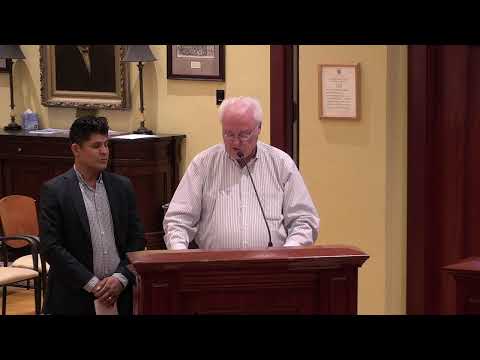
The change came after the applicant, Thomas Pownell, described several requested adjustments to the approved event‑center plan, including moving a dumpster to the northwest corner of the lot, substituting wood screening for the standard masonry screening around the dumpster, removing shrubs along the northern lot edge and installing a taller wood fence to screen an adjacent electric substation. Pownell said the entire lot would be redeveloped and that the site plan review and related special‑use items were “pretty simple.”
Commissioner discussion focused on whether the requested modifications met the prior SD 25‑41 conditions. Commissioner Foster and other members discussed alternatives to wood fencing for the northern edge and the west side, and whether vegetation could better screen the substation. Foster said the substation was “pretty obtrusive” and that vegetation might not effectively screen it; he later said he was “backing off” the request to require shrubs because the berm and elevation near the railroad made screening ineffective. Staff advised that the west‑side screening requirement had been part of SD 25‑41 and that, to remove it from the ordinance, the commission should amend the special‑use conditions.
A motion to amend the special‑use conditions to remove the requirement for west‑side screening along the railroad was moved and seconded. The roll call on the amendment recorded votes in favor from Commissioners Banks, Lasko, Foster, Phillips, Pierce and Chairman White. After the amendment, the commission voted on the application as amended; Glasgow was recorded as voting yes in that final roll call. The commission’s action therefore removed the prior requirement for west‑side screening as a condition of approval and approved the special use and site‑plan changes as amended.
The commission’s action distinguished discussion (options and design tradeoffs for screening materials and dumpster placement) from direction and decision: commissioners debated vegetation versus fence and the practical limits of screening given the adjacent railroad berm, staff recommended an amendment to the ordinance language, and the commission formally amended and approved the special use. The applicant was told to expect follow‑up direction from planning staff regarding next steps and ordinance language.
The vote was unanimous among members recorded on the roll call. No public commenters opposed the changes during the hearing portion recorded in the transcript.