Get Full Government Meeting Transcripts, Videos, & Alerts Forever!
Get email alerts on the Property Taxation topic
No spam. Unsubscribe anytime.
Consultant: county reassessment reflects strong price gains across neighborhoods
Summary
Wampler Inn's Appraisal Group told the board that market sales this year have pushed assessed values well above many current tax assessments; company said notices are expected in early November and reminded owners that tax rate decisions remain with the board.
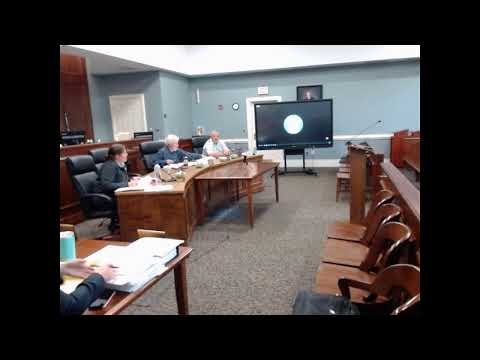
Mr. Reeds, representing Wampler Inn’s Appraisal Group, presented the county’s 2026 general reassessment update and said fieldwork is nearly complete and owner notices are expected in early November.
“State law requires that counties reappraise at least every four years,” Mr. Reeds said, explaining the legal basis for the reassessment cycle and the firm’s process of inspecting properties, grouping the county into market areas and using sales comparables. He said the county is divided into 282 market areas for assessment comparisons.
Reeds showed recent local sales that, in several cases, are substantially higher than current assessments — examples included renovated and water‑front properties that sold for multiple hundreds of thousands of dollars while current assessed values lagged. He said some market areas show price increases per square foot well above the existing assessments.
County officials and supervisors asked procedural questions: how market areas are defined (not by ZIP code, Reeds said, but by geography, mailing address and tax map boundaries), how the GIS system is used for field verification, and the appeals process (informal review with appraisers, then the county Board of Equalization, then circuit court).
Board members raised policy concerns prompted by the market shifts. Supervisor Parr said the reassessment underscores pressure on housing affordability and urged the board to examine short‑term rentals and other local policies; Reeds said some markets statewide are showing rapid gains, though broad corrections are possible in the future.
Reeds emphasized reassessment is intended to equalize tax burden, not automatically raise county revenue: “If you get your notice this fall and your property has gone up 20 percent, that does not mean your taxes will go up 20 percent,” he said, noting the board retains authority over the tax rate.
Next steps: reassessment notices to property owners are expected in early November; property owners may request informal reviews or appeal to the Board of Equalization.
Ending: The board asked staff to return with the sales‑ratio data and to monitor short‑term rental effects on housing supply.