Get Full Government Meeting Transcripts, Videos, & Alerts Forever!
Get email alerts on the Animal Welfare topic
No spam. Unsubscribe anytime.
Appeals panel weighs sufficiency of evidence in Bonilla animal‑cruelty case
Summary
Defense counsel argued the evidence did not prove Amanda Bonilla intentionally deprived her elderly dog of food, water or shelter, calling the case “about a dog on the last days of life.”
Attorney Megan Oreste, representing Amanda Bonilla, told the appeals panel the Commonwealth’s evidence was insufficient to prove that Bonilla intentionally denied her dog food, water or shelter in violation of the statute. “This is a case about a dog on the last days of life,” Oreste said, and she asked the court to apply Russo and Erickson and the Lattimore sufficiency standard to reverse the convictions.
Oreste argued the dog was 15 years old, had stopped eating and drinking, and that witnesses’ observations were limited — for example, one neighbor who mowed the lawn said she had seen the dog for an hour or so and could not see the porch directly; another noted empty water when mowing the lawn over many years. Oreste urged the court that the evidence permitted alternative inferences (end‑of‑life deterioration rather than intentional deprivation) and that the Commonwealth’s proof failed the “beyond a reasonable doubt” sufficiency test.
Commonwealth attorney Carolyn Burbank argued the trial evidence — the animal‑hospital record describing emaciation, moderate to severe dehydration, muscle wasting, pressure‑point lesions and prior animal control interventions about shelter — was enough for a reasonable jury to find intentional failure to provide adequate food, water or shelter. Burbank told the court the judge properly denied a motion for required finding and that objective clinical descriptors support a sufficiency finding.
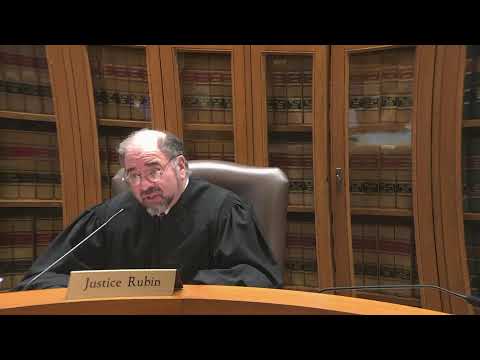
Justices pressed both sides on the statute’s mens rea requirement and the meaning of “adequate” shelter or drink in a single occasion versus an ongoing pattern. Counsel debated hypotheticals about an owner who cannot afford euthanasia and whether leaving a suffering animal to die could be criminal under the statute. The defense emphasized that Erickson requires proof the defendant intentionally failed to provide necessary sustenance, while the Commonwealth invoked objective medical findings and repeated official contacts as circumstantial proof of neglect.
The panel did not announce a ruling at argument; the case tests the boundary between end‑of‑life care and criminal neglect under Massachusetts animal‑welfare law.