Get Full Government Meeting Transcripts, Videos, & Alerts Forever!
Get email alerts on the Search And Seizure topic
No spam. Unsubscribe anytime.
Appeals court probes consent, guest privacy and restraining‑order limits in Lopez search case
Summary
In Kamala v. Lopez, defense counsel argued a pretrial suppression motion was wrongly denied after police seized pants and mail from a shared bedroom; the Commonwealth countered the homeowner had actual and apparent authority to consent and that suppressing the mail would be merely cumulative evidence.
Attorney Lindmark, arguing for appellant Mister Lopez, told the appeals panel the trial court improperly denied a pretrial motion to suppress and a post‑trial motion for a required finding arising from a police search of a shared bedroom. Lindmark said the facts showed the drugs could have been discovered by the mother without police participation and that the physical seizure of the pants, mail and baggies — and the police’s subsequent search without a warrant — infringed the defendant’s expectation of privacy in his sleeping area.
Lindmark emphasized the defendant had lived at the condo for “most of the past six years or more,” kept clothing there and received mail; she argued those facts supported an expectation of privacy even though the mother had access to the room and the door was unlocked. She relied on Massachusetts precedent, including Carter and Commonwealth v. Porter, and cited Minnesota v. Olson on guest privacy, to contend that a nonowner guest still has a legitimate expectation of privacy that cannot be displaced merely because someone else can enter the room.
Assistant District Attorney Dylan Punch told the court the search was a valid consent search. Punch said the homeowner had actual and apparent authority to consent and that the room was a shared space the homeowner accessed freely and used to store boxes. He argued a landlord‑style or hotel‑style scenario would differ, but here the mother’s free access and storage of personal effects supported the lawfulness of the warrantless search.
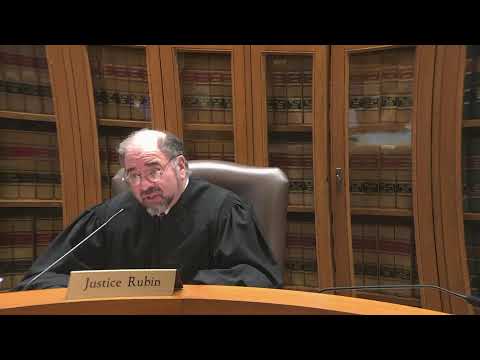
Justices questioned whether a restraining order excluding the girlfriend changed the mother’s authority, whether the defendant’s guest status ended when he was told he could not return, and whose burden it was to prove the defendant’s expectation of privacy. Lindmark argued the Commonwealth bears the burden to justify a warrantless search and that the defendant retained an expectation of privacy at least until given a chance to retrieve belongings.
Both sides acknowledged unresolved factual details in the record — including whether the door was shut but unlocked when the mother first entered, where items were found inside the room, and how long the defendant had been away — and urged the appeals panel to defer to the trial court’s factual findings where appropriate. The court did not issue an immediate ruling from the bench.