Get Full Government Meeting Transcripts, Videos, & Alerts Forever!
Get email alerts on the Criminal Procedure Cjis topic
No spam. Unsubscribe anytime.
Appeals court presses prosecution on CJIS, fingerprint foundation in Eberhardt gun-conviction challenge
Summary
In Commonwealth v. Eberhardt, defense counsel told the appeals panel the prosecution failed to lay adequate foundation linking a fingerprint card and CJIS search results to the defendant’s date of birth; the Commonwealth said Detective Perez was certified and trained but gaps remained in his knowledge of how records are entered and maintained.
Attorney Mary Myles, representing appellant Anthony Eberhardt, told the State Appeals Court that the Commonwealth “failed to present substantive evidence of the defendant’s date of birth,” and that the fingerprint card and CJIS search relied on at trial lacked the foundation tying that datum to the person who sat before the jury. The argument came during oral argument in Commonwealth v. Eberhardt on procedural questions about admissibility and the sufficiency of the government’s foundation for database search results.
The dispute centers on testimony by Detective Perez and admission of a fingerprint card. Myles argued the Commonwealth offered multiple dates of birth and spellings during its investigation and that no one testified that the birth date on the fingerprint card definitively belonged to Eberhardt. The defense asked the appeals court to reverse the firearm convictions or order a new trial and resentencing.
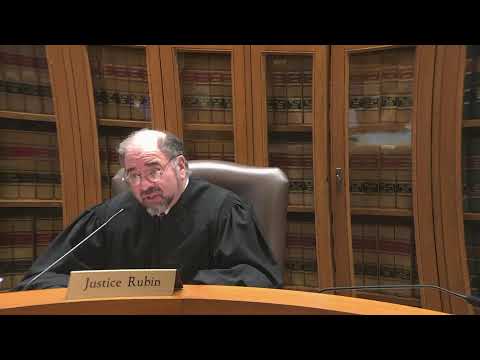
The Commonwealth, through Cynthia Payne, told the court Perez had certification to use CJIS and had testified about recertification training and encryption and secure-login requirements. Payne said that, in the Commonwealth’s view, that testimony established Perez’s familiarity with the system and its record-keeping practices. But justices pressed whether Perez knew how records were entered into CJIS and whether military experience he described was relevant to a Massachusetts database.
Justice questions focused on two points from the court’s recent case law: (1) that a witness must demonstrate familiarity with the process of searching a government database, and (2) that the witness must provide enough foundation to show how records are created, maintained or entered so a jury can evaluate the weight of testimony. Myles argued that the Smith decision requires the Commonwealth to connect the displayed date-of-birth search to the person in court — for example by showing a booking record or another certified government document that ties that date to the defendant — and that Perez’s testimony fell short.
Both sides acknowledged the legal landscape shifted after the Guadado line of cases and that early trials under the new rules produced uneven foundation testimony. Payne conceded Perez’s testimony was sparse in places but contended the recertification training on access and management supported admitting the search output. The justices repeatedly pressed whether a CJIS employee or a representative from the licensing authority would be necessary to establish foundation and how far a trial team must go to show the reliability of an absence-of-record search.
On sentencing-related issues, the panel asked whether a resentencing — if required — must be before a different judge because the original trial judge had retired. Attorneys agreed that, if resentencing were required, the case circumstances (including the retired judge) would determine the appropriate remedy.
The argument concluded with the court hearing both sides on foundational and hearsay issues tied to searches of law-enforcement databases and admission of fingerprint records; no ruling was given from the bench at the hearing.
The appeals court record contains the full briefs and the trial transcript if the panel seeks to review whether the Commonwealth’s foundation for the CJIS search met the standard announced in Smith and related cases.