Corn Belt Ports urges federal and state investment for Illinois River terminals
Loading...
Summary
Representatives of Corn Belt Ports told the LaSalle County Finance Committee that the organization is coordinating regional port districts to attract federal funding for inland port infrastructure and offered county-level support options, including grant assistance and project identification.
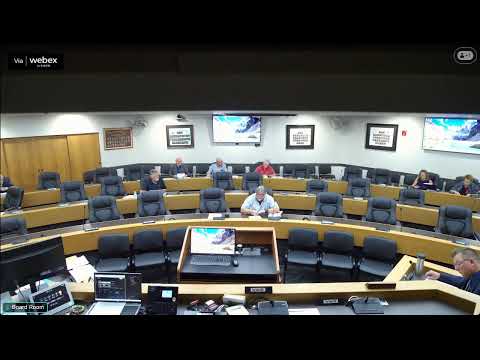
Representatives of Corn Belt Ports briefed the LaSalle County Finance and TIF Committee on Sept. 9 about efforts to secure federal and state investment for inland port infrastructure along the Illinois River.
The presentation, led by Robert Sinkler and Rick Granados, described Corn Belt Ports as a consortium that created regional port districts and secured state recognition for the Illinois Waterway Ports Commission in 2023. “This is the first time we’ve seen a governor call ports an essential part of our economy,” Sinkler said, referencing public statements from Illinois’ governor. Granados, introduced as the organization’s director of navigation, said the group is working to have river regions included in federal maritime policy and legislation, and highlighted an executive order and pending legislation as relevant to that work.
Why it matters: committee members were told that the Illinois River Basin moves a significant share of the state’s freight tonnage and that better recognition and organization could attract federal grant funding for terminals, roads and multimodal connections. Corn Belt Ports said it has helped secure more than $1 billion in investment on the Illinois Waterway since the initiative began in 2019 and has coordinated regional port entities to compete for federal grants such as the Port Infrastructure Development Program.
During Q&A, Corn Belt Ports representatives described their organization as a network of special-purpose government districts created under Illinois law and funded primarily by participating counties. Granados said each port region retains the authority to pursue its own grants but may request staff support from the Illinois Waterway Ports Commission when smaller ports lack capacity. “They can operate independently in that regard,” Granados said. He added that the commission provides staff support for port districts that cover multiple counties.
County officials asked how local projects might access the funds; Corn Belt Ports recommended routing project concepts through the applicable local port entity or the commission so staff can help identify suitable federal grant programs and private contractors that have successfully pursued those grants. The group said federal programs can support multimodal improvements — docks, roads and rail connections — and that past grants have funded both port infrastructure and planning work in the region.
No committee action was taken. Corn Belt Ports requested that local governments consider modest annual contributions to sustain staffing and grant-application capacity; the presenters said their standard funding request is roughly $0.25 to $1.00 per county resident, with some counties contributing more based on perceived regional benefit.
The presentation concluded with an offer to provide county staff with contacts and materials for potential projects. Committee members and Corn Belt Ports staff discussed local examples including a railyard relocation concept near Ottawa and recent state planning grants in the region that the presenters said have totaled millions for port-related projects.
Ending note: Corn Belt Ports told the committee it can provide follow-up information and connect local officials to grant-writing support; committee members did not vote on any funding or formal partnership at the meeting.