Get Full Government Meeting Transcripts, Videos, & Alerts Forever!
Get email alerts on the Homelessness topic
No spam. Unsubscribe anytime.
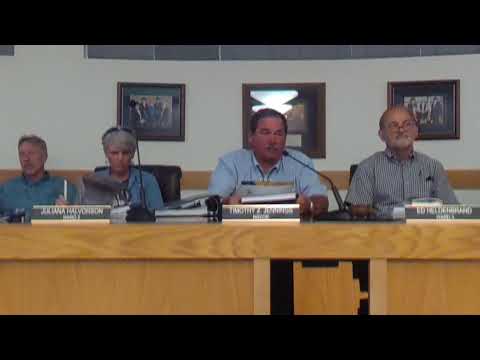
Business owners, police and councilors press Roswell leaders to address downtown homelessness and mental-health gaps
Summary
Business owners and the police described rising public-safety problems downtown, blamed revolving shelter stays and limited mental‑health capacity, and urged the city to coordinate with county and state resources and opioid‑fund opportunities.
Business owners, residents and city police told the Roswell City Council on Wednesday that downtown homelessness has escalated into a public‑safety and public‑health problem that is affecting tourism and local businesses.
At public comment, Chuck Dwyer, who owns a downtown souvenir store and rents nearby properties, described repeated incidents he said have driven visitors away: “This air show with all these people … they’re seeing all this mess,” Dwyer said, and recounted calls to police after people exposed themselves and incidents involving hypodermic needles. His wife, Gina Dwyer, told the council she now carries pepper spray and sometimes changes parking to feel safe at work: “I don’t feel safe,” she said.
Roswell Police Chief Adam said police are making arrests but face limits because of staffing, judicial outcomes and short shelter stays. “We arrest them and we'll be good for a couple of days, but then they're right out on the street doing the same thing,” Chief Adam said, describing a pattern in which people arrested are sent to the local facility, Sunrise, for up to 72 hours and then return to the street.
Why it matters: witnesses and officials said visible disorder — public urination, drug paraphernalia, aggressive behavior and repeated arrests — is damaging downtown’s reputation at a time when tourists draw revenue to local businesses. City leaders and residents urged faster coordination with county and state partners and use of mental‑health and opioid‑response funding.
Councilors discussed short‑ and medium‑term responses but took no formal votes. Several members said they want a coordinated plan with the county, and one councilor said the county plans to issue a request for proposals in October for opioid funds; councilors encouraged applying for those dollars. A councilor offered to meet with the Dwyers to discuss local responses and next steps.
Officials and speakers identified three recurring constraints: a shortage of local behavioral‑health beds and long‑term care options, federal and state legal limits on punishing camping or public presence in some jurisdictions, and limited local capacity to hold people because courts or medical evaluations sometimes result in quick releases. Chief Adam said the department is short about 20 officers and that staffing limits policing presence downtown.
Speakers pointed to existing shelters and services the council does not directly control. Multiple speakers said Sunrise accepts people for 72‑hour evaluation holds, which can return people to the community after that period. Several councilors and the chief said a statewide streamlining of mental‑health resources and more state funding would help; one speaker noted recent mental‑health bills at the state level have allocated large sums that local officials should try to access for services.
What happened next: the council did not adopt an ordinance or funding measure during the meeting. Councilors asked staff to continue researching options and to coordinate with county and regional partners; at least one councilor asked staff to prepare information about applying for opioid‑response and mental‑health grants expected to be announced by the county.
Context and outlook: councilors and the chief described the situation as part of a wider, national pattern and said local fixes require partnerships with county, state and nonprofit providers. Several speakers urged action on outreach, shelter placement and mental‑health resources, while others warned that large congregate facilities can create different safety and service challenges and require sustained funding and staffing.
Ending: Council members encouraged residents to document incidents and to work with city staff and police to present specific funding requests to county and state grant processes; no formal timeline for a follow‑up was established at the meeting.