
Board delays vote on soundproofing modification for Gaia restaurant at 801 Southpointe after residents object
Get AI-powered insights, summaries, and transcripts
Subscribe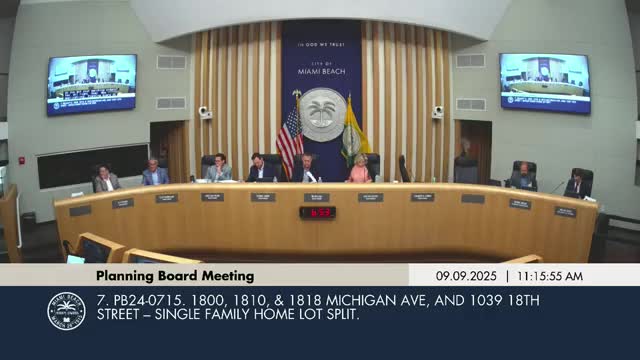
Summary
An applicant seeking to reduce previously required permanent soundproofing and instead rely partly on electronic limits for music asked the Planning Board to modify a conditional‑use permit. Neighbors from the condominium above the space raised strong objections about patron noise, non‑music noise and enforcement; the board continued the item to a
The Planning Board on Sept. 9 continued a request from Gaia (proposed restaurant at 801 Southpointe Drive, unit CU‑2) seeking modification of a previously approved conditional use permit that would lessen the originally required permanent sound isolation measures.
The applicant’s representatives said the business model had changed since the 2023 CUP, and that the originally required ceiling and wall treatments — sized for worst‑case nightclub‑level sound — were financially burdensome for the fine‑dining concept proposed. City peer review and the applicant’s acoustical consultant said ambient, fine‑dining sound levels are substantially lower than nightclub levels and that commissioning tests could verify acceptable transmission levels to units above. “These recommendations were based on a worst‑case model; the restaurant is a fine‑dining concept, not a nightclub,” said Nicholas Rodriguez, attorney for the applicant.
Neighbors and the condominium association objected strongly. The association’s acoustician said the applicant has not supplied sufficient construction details to demonstrate the proffered, reduced treatments would provide equivalent protection. “A limiter can reduce the sound system, but it cannot control people’s voices, impulsive events, and low‑frequency mechanical noise,” Mike Drafic of SR Acoustics told the board. Unit owners said they had been disturbed by construction noise and drilling and worried about late‑night operations and street noise. Several residents who live immediately above the space said living‑room and bedroom noise levels would be affected by crowd noise, deliveries and kitchen activity even if music were limited.
Given the contested technical record and neighborhood concern, the board continued the item to its November meeting and asked the applicant to meet with the condominium association and provide detailed construction drawings, slab thickness and other data the association’s consultant requested. The board also recommended the applicant include the neighborhood association (SOFNA) in outreach and provide documentation to staff before the next hearing.
What was requested: a modification of condition 6.a(3) of the original CUP so that music levels would be controlled operationally (lower maximum sound levels and electronic limiting) rather than through the heavier, spring‑isolated ceiling system originally required. The applicant agreed to commission tests and additional interior treatments but sought approval of the modified, less‑costly approach.
Next steps: Applicant to supply technical documentation and meet with the condo association and neighborhood representatives; item continued to the November Planning Board meeting.