
Parents, teachers and advocates tell Osceola board hub consolidation has created ‘crisis’; superintendent vows to act
Get AI-powered insights, summaries, and transcripts
Subscribe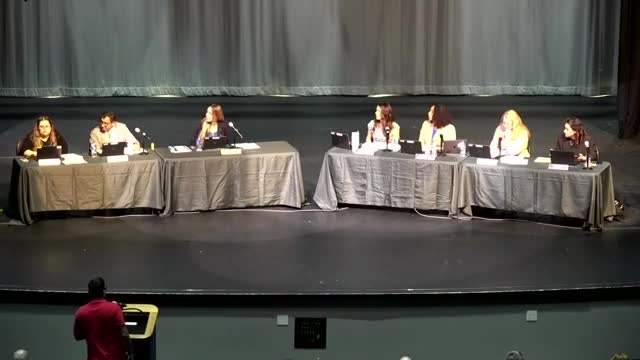
Summary
Multiple parents, teachers and special‑education advocates told the Osceola County School Board that recent consolidation of ESE services into hub models has led to staffing shortages, missed services, safety incidents and teacher injuries; Superintendent said district will not reverse course but pledged follow‑up.
Multiple parents, teachers and advocates told the Osceola County School Board on Sept. 9 that the district’s recent consolidation of exceptional student education (ESE) services into hub sites has produced staffing shortfalls, missed therapy services and safety problems in classrooms.
Speakers described a pattern of unfilled positions, long bus rides, missing physical‑therapy sessions, and an erosion of supports teachers rely on. “You’ve created a crisis situation,” Emily Grintz, instructional vice president for the Osceola County Education Association, told the board, urging immediate data collection and new training plans. Parent speakers said some students had no assigned teacher after staffing changes, that individualized education program (IEP) services were not being delivered, and that parents face longer commutes and safety concerns tied to transport.
Why it matters: ESE programs and IEP compliance are required by federal law and are central to the district’s responsibility to students with disabilities. School staff said the hub model was intended to increase inclusion and academic access after separate self‑contained classrooms failed to deliver sufficient learning; critics said the rollout lacked training, staffing and contingency plans.
Claims and examples on the record: parent Ravi Khatri said his son’s teacher quit and that promised supports — BCBAs and RBTs — were not present; he said the district’s BCBA staffing had dropped and cited a claimed figure of about 13,000 students needing ESE services. Advocate Daryl Greenwood said the district’s behavior supports had been reduced to two or three BCBAs after resignations and injuries, leaving the district short of needed clinical support. Parent Nicole Abar described a student who had previously stepped down from 1:1 to 3:1 supports, then lost that setting after the hub change and began to elope and exhibit daily behavior incidents. Brian Bennett and others said some hub schools lack on‑site curriculum licenses and therapists, forcing families to seek outside services.
Teachers and union leaders described staff injuries and rising stress. Janet Moody, president of the Osceola County Education Association, said, “Our teachers are quitting. Our ESP support staff are quitting,” and reported frequent calls from staff in distress. Several speakers urged immediate data collection on resignations, referrals for behavior incidents, workers’ compensation claims and teacher absences.
District response and board remarks: Superintendent Mark Shanoff acknowledged the complaints and defended the policy goal of greater inclusion and academic access, saying the prior configuration left some students in classrooms where “there was no learning taking place.” Shanoff said the change was a “heavy lift” and promised follow‑up, including meetings with union leaders and principals, additional problem solving and reconvening relevant committees; he also said staff had been responsive to individual messages and that the district will continue to pursue supports. “We are not turning back,” he told the board, framing the work as necessary though difficult.
Requests from speakers: advocates sought immediate training, clear metrics, reconvening of the district DSE (district special education) committee, and rapid staffing fixes. Emily Grintz asked the board to set deadlines and to “go into schools, talk to teachers” and to direct staff to produce an immediate plan for de‑escalation training, documentation and classroom practice.
What’s next: the superintendent said he would meet with union leadership (Janet Moody) and principals and continue rolling out supports; the board directed staff to reconvene a related committee and said members would continue to hear parental and teacher concerns at the district level. No formal board reversal or new budget appropriation was adopted at the meeting.