
Councilors probe scope of smart‑meter opt‑outs; city outlines limited remaining cases and appeals process
Get AI-powered insights, summaries, and transcripts
Subscribe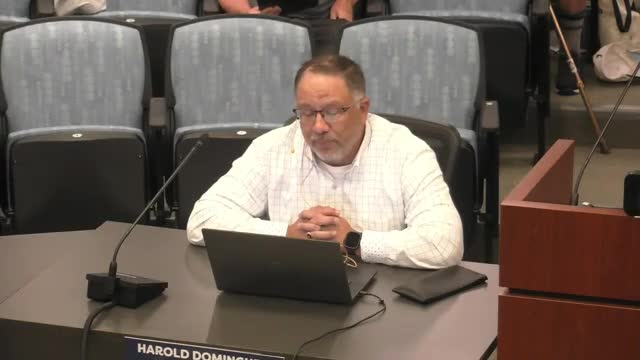
Summary
Councilors asked staff to clarify how many residents remain seeking alternatives to advanced meter infrastructure (AMI). Staff said about 46,000 meters are installed, roughly 340 customers opted out, and fewer than 10 households remain unresolved; the city described options and an independent hearing officer for final appeals.
Councilor Popkin asked the city on Sept. 9 to clarify the scale of resident concerns about advanced meter infrastructure and opt‑out options. David Hornbacher, Assistant City Manager, Utilities and Public Works, and other staff explained the program and described next steps for the small number of remaining cases.
"We've got over 46,000 meters" in the community, Hornbacher said, and roughly 340 people elected the opt‑out option. He said a remaining eight accounts had not selected an option; in two cases, the meter is on a pedestal or otherwise not attached to the house. "There are fewer than 10 residents across the entire city that haven't opted out and want a different solution," Hornbacher said. Staff added that the opt‑out meter is a non‑communicating device and that new analog meters are no longer manufactured; only refurbished analog meters are occasionally available, which raises concerns about warranty and reliability.
Staff outlined practical options and appeals process
City staff said they had asked for options that would allow meters to be located off house walls in cases where residents request it; staff said the cost of moving a meter to an off‑site location would be borne by the requester. Hornbacher told council refurbished analog meters are available only as used equipment and carry risks because the manufacturer's warranty would typically not apply.
Councilor Popkin also asked how residents can appeal. Harold (staff speaker) and Hornbacher described an appeal process in which the final appeal is heard by the city manager or an appointee. To avoid a departmental internal decision, staff said the city appointed an independent hearing officer (not a city employee) to hear those appeals.
Distinction between discussion and direction
Discussion: Councilors and staff discussed the overall scope and technical constraints (lack of new analog meters, differences between pedestal meters and house‑mounted meters). Direction/assignment: staff were asked to present options for relocating meters off residential structures and to track costs and implementation steps; the city has assigned appeals to an independent hearing officer to ensure an external review option.
No formal vote or ordinance action was taken on smart meters at the Sept. 9 meeting; councilor questions prompted staff clarifications and a staff follow‑up to report options and cost estimates to council.