
Teachers’ union president urges HR fixes and early‑retirement (SERP) study to reduce district salary costs
Get AI-powered insights, summaries, and transcripts
Subscribe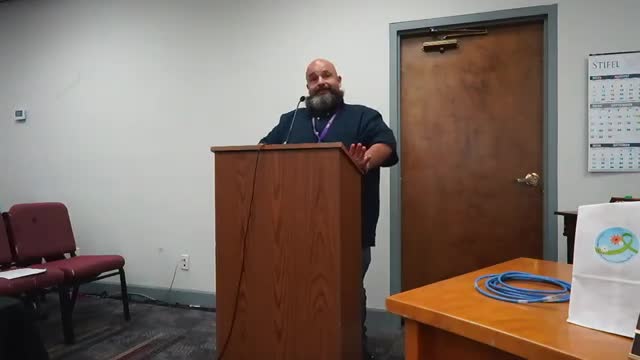
Summary
Central Secondary Teachers Association President Gabino Duenas asked the board on Sept. 9 to direct administration to start a SERP (early retirement) study and to fix HR timing and posting practices that he said hamper staffing and certification maintenance.
Gabino (Gabino) Duenas, president of the Central Secondary Teachers Association (ECSTA), told the board on Sept. 9 that Human Resources priorities and contract processes need improvement and urged trustees to direct district administration to initiate a Service Retirement Enhancement Program (SERP) study.
Duenas reported multiple HR complaints, including coaches whose certifications had expired and positions that were not posted in a timely manner. He said these HR timing and priority issues hamper recruitment and retention and urged trustees to press HR to act promptly on certification notifications and position postings.
On retirement incentives, Duenas asked the board to direct the district to begin a SERP analysis (he referenced prior SERP work done for other districts and a 2019–20 internal study). He presented high-level salary-differential examples—saying, for example, that replacing a teacher at late-career placement (year 34, column 6 in the district salary schema) with a new teacher at step 1 could yield savings on the order of tens of thousands of dollars annually (he cited a $92,000 difference in an extreme comparison), and that even replacing with a mid-career hire could save roughly $47,000–$56,000 per position under his scenarios. Duenas said the district currently employs more than 100 teachers on the highest pay column and identified at least 15 certificated staff with long service who are on that column; he argued a SERP could generate multi‑year savings and that Keenan Associates could perform the analysis.
Duenas also said the district previously declined to participate in a SERP study when he requested one; he asked trustees not to repeat that decision and to have the district provide the data Keenan or another actuarial firm would need to evaluate potential savings and costs (including the multi‑year CalSTRS payment schedule that accompanies some SERP designs).
What the board did: Trustees did not take an immediate vote on the request at the Sept. 9 meeting. Duenas asked for a board direction to start the SERP study and to address HR priorities; the transcript records his requests and supporting data points but no board action was recorded on initiating a SERP study during the public meeting.
Why it matters: If the district pursues a SERP and several long‑service staff accept, the short-term district cost could increase to cover the retirement incentive and CalSTRS payment obligations, but Duenas argued multi-year salary-savings could result and would help address a projected structural deficit. He also argued timely HR practices affect staffing continuity and operations.
Ending: Duenas urged the board to direct administration to start the SERP study now and not repeat prior hesitation; no formal board direction or vote was recorded in open session during the Sept. 9 meeting.