
PSC grants CPCN for Dodge County distribution interconnection project with route and environmental conditions
Get AI-powered insights, summaries, and transcripts
Subscribe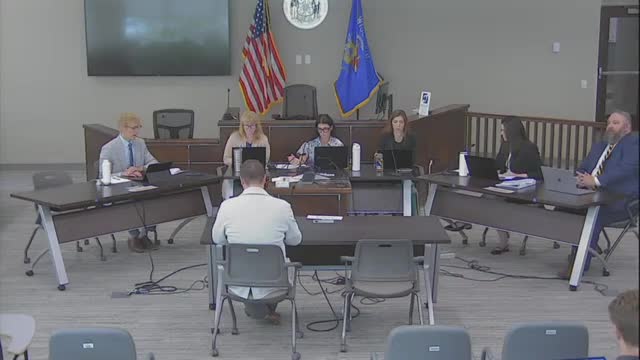
Summary
The Public Service Commission granted a certificate of public convenience and necessity to American Transmission Company to construct the Dodge County distribution interconnection project, approving a preferred route and attaching project-specific environmental and siting conditions.
The Public Service Commission of Wisconsin voted Sept. 11 to grant a Certificate of Public Convenience and Necessity (CPCN) to American Transmission Company (ATC) for the Dodge County Distribution Interconnection Project, with route selection and multiple project-specific conditions addressing environmental protection, agricultural impacts and construction reporting.
Commissioner Hawkins, who led the discussion, described public participation as improving the project: “This is a great example, I thought, of a project where, public comments, make the project better,” and called out commitments such as bird diverters near the Robins shorebird waterfowl production area along Beaver Dam Lake.
Why this matters: ATC’s project is designed to interconnect a large continuously operating data-center load, resolve thermal and voltage limitations in the area, and maintain reactive power margins and voltage support. The commission found the project necessary to meet reliability standards and approved the preferred route as the better option compared with an alternate route.
Project scope and schedule: the project includes expansion of the North Randolph substation in the town of Randolph, construction of a new Manhattan substation in the town of Trenton, rebuilding about 15 miles of existing 138 kV line (the X47 corridor) between those substations, and construction of two new 138 kV double-circuit lines to the new large-load customer-owned substations. ATC estimated the preferred route at about $191 million and the alternate route at about $198 million. Construction is expected to begin in early 2026 to meet a July 2027 in-service date for the new load.
Route selection and environmental review: the commission approved the preferred route, citing lower cost, shorter length, fewer impacts to residences and fewer impacts in locations identified by the project’s sole intervener, P and Q Warmka, LLC. The commission adopted the jointly prepared environmental assessment and found that the record showed no need for a full environmental impact statement under the Wisconsin Environmental Policy Act (WEPA). The PSC and Department of Natural Resources (DNR) recommended several project-specific mitigation conditions to avoid impacts to wetlands and waterways; the commission adopted those conditions as necessary.
Agricultural and landowner concerns: the Department of Agriculture, Trade and Consumer Protection (DATCP) raised concerns in the Agricultural Impact Statement about routing near the Warmka quarry and proposed several routing and conditions to mitigate agricultural impacts. The commission declined to adopt a DATCP-proposed reroute that would run additional circuits through the quarry, finding that option would likely be infeasible and costly; instead the commission adopted two DATCP-proposed route-protection conditions limited to avoiding impacts to existing permanent erosion-control structures and requiring replacement of temporary controls with permanent controls if disrupted.
Order conditions and contested language: the commission discussed standard “romanette” conditions and agreed to two textual edits to maintain consistency with prior decisions. The commission rejected adopting a proposed permanent change to the standard permitting-related condition (romanette 2) as a new standard; commissioners agreed any modification to that consumer-protection condition should be justified in the record on a case-by-case basis. The commission also included a condition requiring summaries of competitive bids as part of quarterly reporting, and adopted timing flexibility for tree-clearing restrictions intended to protect nesting birds and roosting bats, adding the qualifying phrase “to the extent practicable.”
Legal and procedural findings: commissioners found the project satisfies statutory public-need and route-siting standards, complied with WEPA requirements, and will not unreasonably interfere with local land-use plans. Commissioners emphasized that this decision concerns siting and certification only; cost recovery and allocation will be decided in separate proceedings or at the Federal Energy Regulatory Commission where applicable.
The commission voted unanimously to grant the CPCN with the modifications and conditions discussed on the record. Commissioner comments stressed improved project design from public input, the importance of a complete record for any route or condition changes, and the need to ensure consumer-protection language is preserved unless a clear justification for modification is provided in the docket.