PSC approves multiple voluntary utility energy-efficiency programs, sets reporting and evaluation conditions
September 12, 2025 | Public Service Commission, State Agencies, Executive, Wisconsin
This article was created by AI summarizing key points discussed. AI makes mistakes, so for full details and context, please refer to the video of the full meeting. Please report any errors so we can fix them. Report an error »
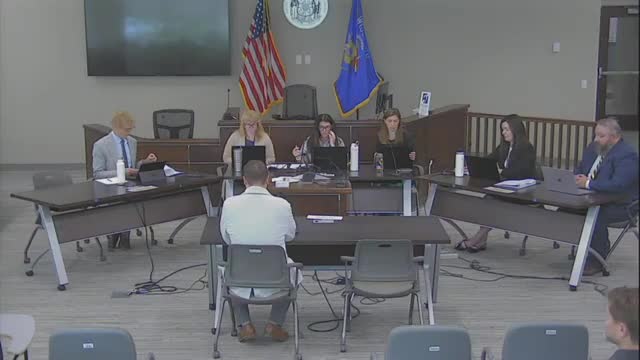
Commissioner Nieto said the filings build on the statewide Focus on Energy program and highlighted outcomes for low-income whole-home weatherization: “This program reduces electric usage, by 13% on customer's bills and gas usage by 13% as well.” The commission approved the WEPCO/Wisconsin Gas residential assistance program and two other low-income whole-home programs after discussion of participation goals and whether to require formal evaluation plans.
Why this matters: the voluntary programs supplement the statewide Focus on Energy program and aim to deepen efficiency gains and reduce the need for additional generation and transmission investments. The commission evaluated the proposals under its public-interest standard and the program-budgeting framework that keeps utility conservation escrow accounts balanced.
The most substantive decisions in the group:
- WEPCO and Wisconsin Gas (docket 5EE2026): approved for 2026–27 after the commission decided not to require a separate evaluation, citing the program’s established record. Commissioner Nieto supported approving the program and not requiring a new evaluation plan at this filing.
- NSPW (docket 4220EE2026): approved commercial and residential programs, and the commission accepted the utility’s request to reset the program-level cost-effectiveness goal to a 1:1 utility-administrator test to align with Focus on Energy. The commission also required NSPW to file an evaluation, measurement and verification (EM&V) plan by Dec. 1, 2025. Commissioner Nieto noted the program’s 2024 evaluation showed $11.28 of utility-dollar savings per dollar spent.
- WP&L (docket 6680EE2026; program sometimes referenced as ELLIWIP): the commission approved the enhanced low-income weatherization program with a directed follow-up. Commissioners required WP&L to work with commission staff and submit updated analysis addressing a multifamily-incentive cap (the filing currently targets 94 multifamily units and proposed a $4,000 per-unit cap that previously limited multifamily participation) by Dec. 1, 2025; staff also required WP&L to file an annual program report by April 1 each year. The commission said the utility should explain how multifamily caps and participation goals will be met and whether higher per-unit incentives are needed.
- WPSC (docket 6690EE2026): approved the residential assistance program modeled on the WEPCO/Wisconsin Gas approach; commissioners agreed not to require a separate evaluation plan in this round given program history.
Commissioner Hawkins raised an equity and rate-design point for future consideration: “...looking at who is paying for these programs should be evaluated in a in a rate case proceeding, to make sure that we don't have cross subsidization of these programs going on.” Hawkins said that because conservation escrow charges are collected from all customer classes, a large commercially focused program could create cross-class subsidies that merit scrutiny in a rate case.
Where the commission imposed conditions: for NSPW the EM&V plan deadline (Dec. 1, 2025) was set; for WP&L the commission required a staff-reviewed submission addressing the multifamily cap by Dec. 1, 2025 and an annual report by April 1; other programs were approved subject to the modifications discussed on the record. The commission kept the approvals focused on program design, reporting and verification rather than ordering new program elements.
No party disputed the utilities’ demonstration that the programs were lawful under state energy-efficiency frameworks; the commissioners emphasized alignment with Focus on Energy and the need to avoid inconsistent cost-effectiveness incentives. The commission’s approvals leave cost recovery questions to future rate proceedings and, where required by statute or contract, federal review.
The commission voted unanimously on the motions to approve the programs. Minor administrative items on the meeting agenda (minutes, notices) were handled before the substantive discussion.
View the Full Meeting & All Its Details
This article offers just a summary. Unlock complete video, transcripts, and insights as a Founder Member.
30-day money-back guarantee
Sponsors
Proudly supported by sponsors who keep Wisconsin articles free in 2025

