
PSC grants CPCN to ATC for Dodge County interconnection project with routing, environmental conditions
Get AI-powered insights, summaries, and transcripts
Subscribe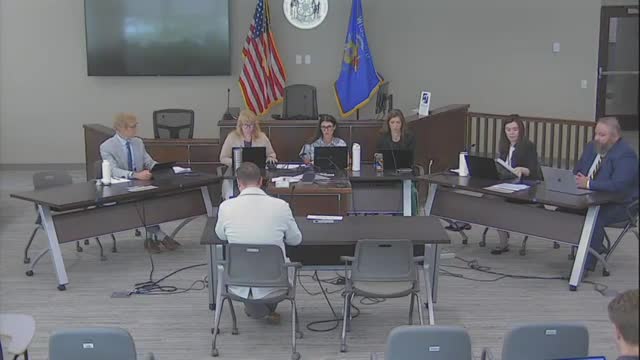
Summary
The Public Service Commission granted a certificate of public convenience and necessity to American Transmission Company for the Dodge County distribution interconnection project, selecting the preferred route and adding project‑specific environmental and agricultural mitigation conditions.
The Public Service Commission of Wisconsin on Sept. 11 granted a certificate of public convenience and necessity (CPCN) to American Transmission Company (ATC) for the Dodge County Distribution Interconnection Project, approving the preferred route with conditions addressing environmental protections and agricultural impacts. The commission found the project is needed, in the public interest, and that no cost‑effective or technically feasible non‑transmission alternative would replace the proposal.
Commissioners said the project is intended to interconnect a large, continuously operating data‑center load and to resolve thermal and voltage limitations affecting the Beaver Dam area. The approved plan would expand the North Randolph substation in the town of Randolph, construct a new Manhattan substation in the town of Trenton, rebuild about 15 miles of existing 138 kV line (the X‑47 corridor), install a double‑circuit 138 kV line between the Randolph and Manhattan substations, and add two new 138 kV double‑circuit lines from Manhattan to the new large‑load customer substations. Construction was described in the record as expected to begin in early 2026 to meet an anticipated July 2027 service date for the new load.
The commission reviewed two full route alternatives and confirmed the applicant’s need analysis, which staff and modeling supported for reliability (NERC) standards. Cost estimates in the record put the preferred route at about $191 million and the alternate route at about $198 million. No party disputed the need for the project; one intervener — P and Q Warmka, LLC (PQW) — participated and raised concerns that were addressed in part through project commitments.
The commission highlighted commitments ATC made in response to public comments and staff review, including adding bird diverters near the Robins shorebird/waterfowl production area adjacent to Beaver Dam Lake and working with DATCP staff and affected landowners on agricultural‑impact mitigation. Commissioners said those commitments and DNR and DATCP recommendations made the proposal more acceptable in the record.
On route selection, the commission chose the preferred route because it is shorter, less costly and reduces impacts on residences and environmental features compared with the alternate route. Several commissioners noted the application record did not clearly present every possible segment combination between preferred and alternate alignments and urged future applicants to provide clearer, pre‑packaged segment combinations to allow the commission maximum flexibility to address localized impacts.
Project‑specific conditions adopted by the commission included DNR‑recommended measures to avoid indirect wetland and waterway impacts, a competitive‑bidding summary requirement in quarterly reporting (as applicable), and an avian/bat protection timing restriction on pruning and clearing with a ‘‘to the extent practicable’’ qualifier to avoid undue construction scheduling impacts. The commission discussed, but declined to adopt as a permanent rule change, a proposed modification to the standard condition requiring receipt of permits before construction in a corridor; commissioners accepted a project‑specific, limited modification only for this docket in view of the record presented and with a statement that the change should not become a standard condition without fuller justification in future dockets.
DATCP witness recommendations regarding avoiding impacts to certain segments (including suggested rerouting through an existing quarry corridor) were largely not adopted; the commission found rerouting through the quarry would be costly and problematic. However, the commission accepted two targeted DATCP‑suggested conditions to protect existing permanent erosion‑control structures and to require replacement of temporary measures with equivalent permanent controls where disruptions occur.
The commission concluded that the project will not have undue adverse environmental impacts that require an environmental impact statement. An environmental assessment prepared jointly by PSC and DNR staff formed the basis for that finding and the DNR‑proposed conditions that the commission adopted.
At the meeting end, the commission moved, seconded and approved the CPCN for Docket 137‑CE‑210 by voice vote; the transcript records the motion, a second, and unanimous “Aye” responses. Commissioners said cost recovery for the project (how costs will ultimately be allocated) is to be determined in separate proceedings and potentially by federal review where applicable; the CPCN decision addresses certification and siting only.