PSC approves expanded voluntary efficiency programs, sets reporting and evaluation requirements
Summary
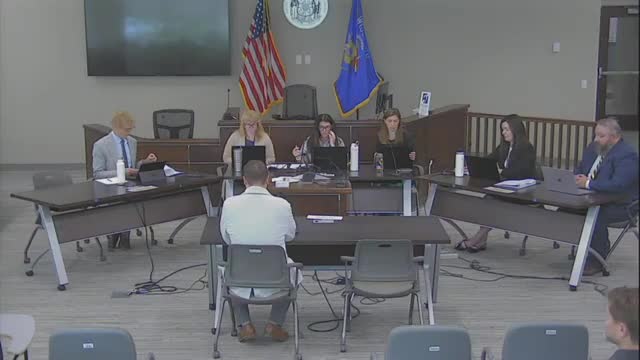
The Public Service Commission of Wisconsin on Sept. 11 approved four investor‑owned utilities’ voluntary energy‑efficiency and low‑income weatherization programs for the 2026–27 program year, directing certain evaluation and reporting steps and asking one utility to revisit multifamily incentives.
The Public Service Commission of Wisconsin on Sept. 11 voted to approve multiple voluntary energy‑efficiency programs filed by investor‑owned utilities, and it attached evaluation and reporting requirements intended to improve program transparency and participation. The commission approved the utilities’ proposed 2026–27 program offerings while specifying different expectations for measurement, evaluation and reporting depending on the program and utility.
The decisions affect four dockets: Docket 5‑EE‑2026 (WE Energies/Wisconsin Gas residential assistance/weatherization program), Docket 42‑20‑EE‑2026 (NSPW commercial and residential programs), Docket 6680‑EE‑2026 (Wisconsin Power & Light enhanced low‑income weatherization), and Docket 6690‑EE‑2026 (Wisconsin Public Service Corporation residential assistance program). Commissioners said the voluntary programs are intended to complement the statewide Focus on Energy program and to deepen efficiency gains beyond the statutorily required minimum.
Commissioners noted that Focus on Energy is the statewide foundation with contractor networks and incentive structures; the voluntary programs layer additional incentives or services on top of Focus to increase participation or provide measures Focus does not offer. The commission emphasized that the voluntary programs are funded from utilities’ conservation escrow accounts; underspent amounts remain in escrow and can be carried forward and the accounts are “trued up” to avoid over‑collection.
On Docket 5‑EE‑2026, the commission approved the WE Energies/Wisconsin Gas Residential Assistance Program (a whole‑home weatherization and low‑income program). The commission agreed not to require a separate evaluation, measurement and verification (EM&V) plan for this filing, citing the program’s established track record and recent evaluation follow‑up. The approved filing includes a proposed ramp‑up in 2027 participation that commissioners described as ambitious; staff and commissioners noted the program’s historical estimated energy savings of about 13% for both electric and gas on treated homes.
In Docket 42‑20‑EE‑2026, the commission approved NSPW’s small‑ and medium‑commercial bonus incentive program and a residential home energy assessment program, with changes. NSPW’s commercial program offers bonus incentives equal to 50% of Focus incentives (with a $5,000 per‑premise cap) and a mid‑market bonus that adds 25% to that incentive for customers without a dedicated account manager. Commissioners accepted the utility’s proposal to reset the program’s cost‑effectiveness goal to the industry standard around a 1:1 benefit‑to‑cost threshold (the filing had previously been held to an 8:1 standard), noting the program’s strong demonstrated performance (the 2024 evaluation found roughly $11.28 of utility dollar savings per $1 spent). The commission also required NSPW to submit a staff‑approved EM&V plan by Dec. 1, 2025.
Docket 6680‑EE‑2026 (Wisconsin Power & Light’s enhanced low‑income weatherization program, ELLIWIP) drew discussion over the incentive cap for multifamily units. Commissioners said the program historically served multifamily units when the per‑unit incentive cap was $8,000; after the cap was reduced to $4,000, multifamily participation fell. Rather than immediately increasing the cap, the commission required WP&L to work with commission staff and file an updated proposal addressing multifamily caps and customer participation by Dec. 1, 2025. Commissioners also required WP&L to file an EM&V plan by that date and to provide annual program reports by April 1 each year going forward.
On Docket 6690‑EE‑2026 (Wisconsin Public Service Corporation’s residential assistance program), the commission approved the filing and — similar to WE Energies and WPSC’s other low‑income residential assistance filings — declined to require a new EM&V plan for this cycle, citing the program’s established record and recent evaluation follow‑ups.
Commissioner Hawkins raised a cross‑subsidization concern for future rate proceedings, noting that large commercial‑focused programs are funded from conservation escrow accounts paid by all customer classes. Commissioners agreed the issue of how programs are paid for could be examined in a rate case or future proceeding; no formal order point on cost allocation was adopted at this meeting.
All votes on the program approvals were voice votes with commissioners answering “Aye.” The motions as recorded in the public transcript were moved and seconded and carried unanimously.
Commissioners framed these approvals as consistent with state law encouraging energy‑efficiency activity and as complementary to Focus on Energy. They attached targeted administrative requirements — a 12/1/2025 deadline for certain EM&V plans and a 4/1 annual reporting deadline for WP&L’s program — to improve oversight and to inform future program filings.
Looking ahead, commissioners said they expect program administrators to coordinate with staff on EM&V and multifamily participation issues and to provide the filings and reports the commission has required. The commission did not address cost recovery in this meeting; members noted that cost recovery questions are resolved through other proceedings and federal review where applicable.