
Senators and OSTP weigh regulatory sandboxes and federal preemption for AI
Get AI-powered insights, summaries, and transcripts
Subscribe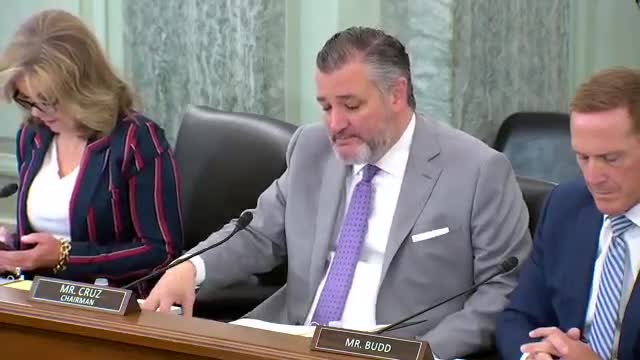
Summary
Senators pressed for regulatory sandboxes and debated federal preemption of state AI laws; OSTP Director Michael Kratsios endorsed sandboxes and supported working with Congress on preemption concerns to avoid a patchwork of state rules.
Senators and Michael Kratsios, Director of the White House Office of Science and Technology Policy, told the Senate Subcommittee on Science, Manufacturing, and Competitiveness that regulatory sandboxes are a preferred tool to allow AI innovation while agencies and Congress develop durable rules.
Why it matters: Several senators warned that a patchwork of state laws would impede national deployment of AI and advantage incumbents with legal resources. OSTP and the administration view sandboxes and potential federal preemption as ways to avoid fragmented regulation that could choke product adoption.
Sen. Ted Cruz, Full Committee chairman, introduced a legislative framework that includes permissive sandboxes and protections against conflicting state rules. “A regulatory sandbox … will give entrepreneurs room to breathe,” Cruz said in opening remarks introducing his bill; Kratsios told the committee the administration “very definitively” promotes sandboxes and said OSTP is “excited to work with you and the committee on an approach to make this into law.”
On state preemption, Kratsios described the administration’s position that a “patchwork of state regulations is anti‑innovation” and that preemption is being considered to preserve a unified national market for AI products. He said agencies that fund state programs would have a role in implementing the administration's guidance on limiting federal funding to states with “unduly restrictive” AI rules.
Multiple senators expressed concerns about who would decide which state laws are “unduly restrictive.” Kratsios told the committee that decisions would be left to the relevant agency secretaries. Senators asked for clearer procedures and guardrails so that determinations are not ad hoc.
The committee heard bipartisan support for sandboxes tied to sector or use‑case testing rather than blanket national AI rules; witnesses and members said sector‑specific agency rulemaking is preferable to a single sweeping statute. Kratsios echoed that view and recommended use‑case and sector‑specific evaluation and standards work as a practical path forward.
The issue remains unresolved: senators asked OSTP to help draft language and to explain how agencies would administer any funding restrictions tied to state laws.