
Senators seek clarity on who will determine whether state AI laws are 'unduly restrictive'
Get AI-powered insights, summaries, and transcripts
Subscribe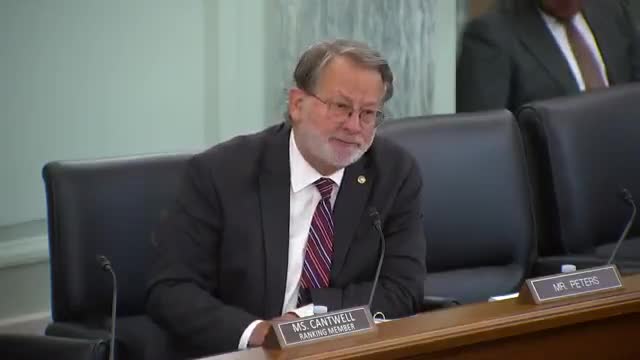
Summary
At the Sept. 17 hearing, senators pressed OSTP Director Michael Kratios about the administration's proposal to limit federal funds to states with 'unduly restrictive' AI rules; Kratios said funding agencies would make those determinations but offered no detailed criteria.
Senators at the Sept. 17 subcommittee hearing asked OSTP Director Michael Kratios to explain the administration's plan to condition federal funds on state AI laws the White House deems "unduly restrictive."
Senator Peters asked repeatedly who will decide which state AI laws are "prudent" and which are "unduly restrictive." Kratios replied that agencies that fund relevant programs would make those determinations and that he expects agency secretaries to exercise judgment when implementing the action plan. "I think that's something that's gonna be left to the agencies that are funding the various programs that impact states," Kratios said.
Peters pressed the point, asking whether the action plan names specific actors or criteria; Kratios responded that the action plan is a set of recommended actions and that agencies would implement them. The exchange highlighted a gap between the administration's stated goal of avoiding a patchwork of state rules and lawmakers' demand for transparent, predictable criteria for any federal conditionality.
Other senators argued that a patchwork of state laws could advantage large companies that can afford legal teams, while critics warned that federal preemption or conditionality could impede states' abilities to protect residents. Kratios said the administration is eager to work with Congress to define the right statutory approach and that agencies would be responsible for applying action‑plan principles in specific funding decisions.
No formal mechanism or decision matrix was presented at the hearing; Kratios urged interagency cooperation and legislative partnership to resolve the uncertainties.