
Wichita County adopts $84.68 million 2026 budget, sets total tax rate at 0.521303
Get AI-powered insights, summaries, and transcripts
Subscribe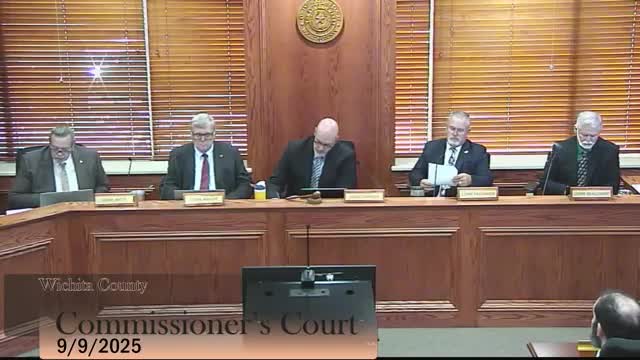
Summary
The Wichita County Commissioners on Sept. 9 adopted an $84,680,000 all‑funds 2026 budget and set a total property tax rate of 0.521303, approving a package of rates and votes the court said will raise about $1.8 million more in tax revenue than last year.
Wichita County Commissioners on Tuesday adopted an $84,680,000 all‑funds budget for 2026 and set a combined property tax rate of 0.521303, voting 5–0 to approve the budget and associated maintenance, road and debt rates.
The adopted budget is $1.4 million smaller than the 2025 all‑funds total but increases the county’s general fund spending by about $3.5 million, primarily to cover employee compensation, higher IT costs and increased property and liability insurance, County Judge Burchitt said. "This is an $84,680,000 budget," Burchitt said. "That's a decrease of $1,400,000 from the 2025 budget."
The judge outlined the county’s spending priorities and said public safety accounts for roughly 38% of all funds, the judicial system about 11%, health and welfare about 9% and road and bridge maintenance about 9%. Debt service and construction each account for about 5% of all funds, with general administration and support services about 15%.
Why it matters: Commissioners said the package balances funding needs for core services — jail and law enforcement, courts, indigent health and defense, and roads — while preserving a reserve the court estimated at roughly $14 million. The court emphasized that much of the previously large grant spending has ended as American Rescue Plan Act (ARPA) obligations roll off, which accounts for the overall all‑funds decline.
Key figures and budget changes: the judge told the court the budget includes a roughly $2.5 million increase for employee compensation (including across‑the‑board merit or pay adjustments and larger raises targeted to attorney and law‑enforcement classifications), about $400,000 more for IT, and about $125,000 extra for property and liability insurance. He said judicial pay increases reflected legislative changes and in some cases are offset partly or fully by increased state funding.
On reserves and ARPA: Auditor Matt Davis and others reported the county obligated nearly all ARPA funds; the figure given was $25,684,127 obligated and $25,684,126.80 planned to be spent — leaving a return of $0.20 to the federal government. The court characterized the county’s fiscal position as stable and said debt that remains is voter‑approved debt being paid down each year.
Tax rates and revenue effects: the court set the maintenance and operations (M&O) rate at 0.468347, the special road and bridge tax at 0.023295 (combined 0.491642), and a debt (I&S) rate at 0.029661, producing the total rate of 0.521303 the court adopted. The judge explained the tax‑rate discussion is technically complex because state “truth in taxation” worksheets compare different rate calculations. He said values in Wichita County rose enough that, despite a small decrease in the nominal overall rate from 2025, the adopted rates will raise about $1.8 million in additional property tax revenue over last year; about $563,000 of that increase is from new property added to the tax rolls.
Officials provided an example for household impact: the judge said the median homestead value in Wichita County (given as $187,000) would see roughly a $24 change under the no‑new‑revenue comparison the judge used to explain the effect, described in the meeting as about "$2 or more" per month. The judge acknowledged the state's required notice language can present increases in multiple ways and advised property owners to consult the Tax Assessor's worksheet for precise, individualized figures.
Formal actions: Commissioner Watts moved to adopt the 2026 budget; the motion passed 5–0. The court separately approved the M&O and road rates and then set the I&S rate; each related vote passed 5–0. The final motion to adopt the combined tax rate of 0.521303 was made by the judge, seconded by Commissioner Watts, and passed 5–0 on a roll‑call vote.
What remains: Commissioners invited public questions and said truth‑in‑taxation materials and worksheets are included in the budget appendix. The court also noted that the budget authorizes higher compensation in key classifications to improve retention and recruitment and that the county will continue to monitor spending and reserves.