
Santaquin planning commission sends amended water‑use element to city council after unanimous vote
Get AI-powered insights, summaries, and transcripts
Subscribe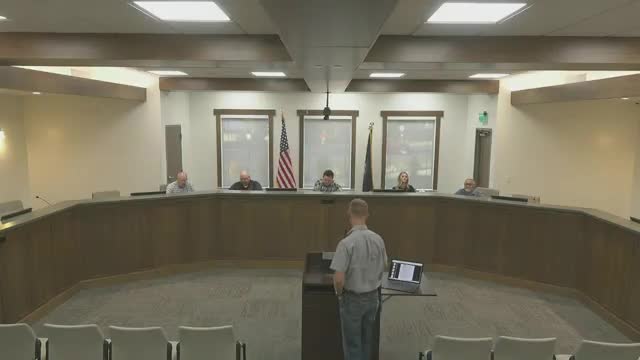
Summary
On Sept. 9, 2025 the Santaquin City Planning Commission unanimously forwarded a positive recommendation to the city council on a required general plan amendment adding a water‑use and conservation element, amending draft language to clarify turf terminology and rate language.
The Santaquin City Planning Commission on Sept. 9 unanimously recommended that the city council adopt a draft water‑use and conservation element for the city’s general plan, amended by the commission to clarify landscaping language and water‑rate wording. The commission’s recommendation followed a staff presentation and a period of commissioner questions. The item was required by the state legislature’s 2022 mandate that most cities include a water‑use and conservation element in their general plans. The commission’s action was a positive recommendation, forwarded to the city council as amended. The draft element summarizes roughly 12 years of historical water use, describes current sources and rights, and lists local conservation measures and possible future policies. City staff said the historical record shows a recent spike in reported pressurized‑irrigation use largely caused by a state grant that replaced meters that had been underreporting use. Staff said Santaquin’s culinary water rights are sufficient for theoretical long‑term buildout, but that delivering water to new development will require infrastructure projects (wells, pump stations and storage) as growth occurs. “We have several sources. Well, we have several sources. We've got, 3 wells that we can draw on for our culinary water usage that we actually have in in service now. We also have a spring that comes out of Santaquin Canyon,” a city staff presenter said when describing sources. The draft lists current and potential conservation measures: low‑flow plumbing fixtures consistent with building codes, smart irrigation controllers, limits on turf and minimum turf widths in narrow strips (staff noted an eight‑foot guidance for turf strips), and rebate programs available through the Central Utah Water District to encourage controller upgrades and landscaping changes. Staff said pressurized irrigation currently relies on multiple supplies, including water purchased through the Summit Creek Irrigation Company, a groundwater well, and treated effluent from the city’s water reclamation facility. Staff also told commissioners that Santaquin will be able to begin taking delivery next year from the Utah Lake System (ULS) pipeline and that the city expects to be able to withdraw just over 900 acre‑feet annually from that source when the connection is made. The draft includes numeric context and examples for planners and the public: staff said a typical single‑family home in Santaquin uses about two‑thirds of an acre‑foot of water, and noted the duty rate for irrigated turf is referenced in the draft at roughly four acre‑feet per acre. Commissioners focused questions on how the draft recommends pricing structures. The draft had suggested exploring allocation‑based, tiered pricing models that could base charges on lot size and expected usage, following models used in other Utah cities. Several commissioners said they were concerned about using lot size alone as a proxy for use and asked staff to clarify whether base charge adjustments would be tied to meter size or to actual measured usage. Commissioners amended the commission’s motion to ask staff to redline the draft so it (1) uses “sod” or “real turf” rather than the ambiguous word “turf,” and (2) clarifies rate language to distinguish base charges (for service/ meter size) from volumetric/usage rates and any allocation‑based tiers. The amended motion was made on the floor, seconded, and adopted; the final vote to forward the amended document to the city council was unanimous. The planning commission’s unanimous recommendation is advisory; the city council will consider the amendment and any ordinance or rate changes that might follow. Staff told the commission that some recommended measures will require additional funding or separate ordinance actions (for example, rate‑structure changes or rebate programs), and that implementation timing depends on council direction and available funding. Documentation and next steps noted in the meeting packet include: the draft water‑use and conservation element, historical consumption charts back to 2013, references to the 2022 state requirement to add a water element, and suggested policy options for council consideration. The commission asked staff to return with the redlined language and any clarification about how proposed pricing models would work in practice before the council review.