
Board hears detailed transportation briefing as bus routes, driver shortages and contract choices put pressure on budget
Get AI-powered insights, summaries, and transcripts
Subscribe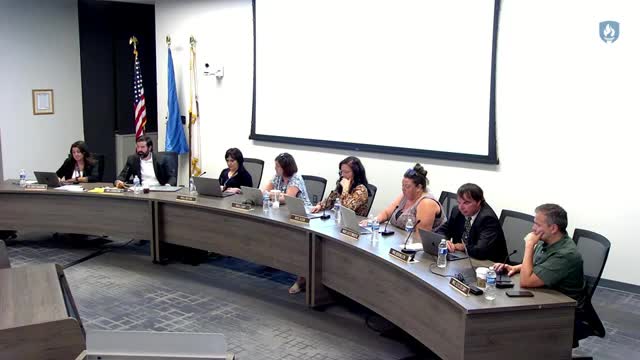
Summary
District 59 leaders told the board that driver shortages, market sign-on bonuses and route consolidation have created service pressure; the district will issue new bid specifications this year while exploring hybrid and long-term models to contain rising transportation costs.
District 59 business staff told the Board of Education that transportation remains a high-cost, high-priority operational issue after the start of the school year, with driver shortages and market dynamics creating occasional service lapses and prompting planning for a new bid process.
Mohsen, the district's chief school business official, briefed the board and described the background: "Our biggest challenge before the start of the school was, will the bus company be financially, able to provide the services?" he said. Board members and staff discussed on-time performance targets, recent late runs and contracting choices.
Why it matters: transportation is a major line-item in the district budget and influences student start times, route structure and equity of service. Several board members asked whether the district should move toward owning buses or a hybrid model to reduce long-term inflation in vendor rates.
Performance and causes of disruption
Mohsen said the district tracks a 95% on-time threshold and noted specific recent days of concern when reliability slipped (one day at about 94.5 percent around Sept. 2 and an isolated day with a 1.5 percent problem). He attributed most delays to absent drivers and substitute-driver shortages. "On the day they were expecting the drivers to show up, those drivers were somewhere else," he said. He added that some vendors are using significant sign-on bonuses to recruit or retain drivers and that the market has seen bonuses "close to 3,000," which increases vendor costs.
The district reported consolidations to adjust to shortages: staff said they doubled some routes, consolidating 12 routes into six where feasible and adjusting bills to reflect the changed runs. Mohsen said the district measures routing from the first stop to the drop-off and that most bus rides were within a reasonable window; he noted there are exceptions for special-education placements that are longer.
Contracting, bids and alternatives
Board members pressed staff about the upcoming procurement: Mohsen said this is the last year of the current Safeway contract and the district will issue new bid specifications to open the next procurement cycle. He emphasized the legal standard for awards: the lowest responsible bidder, not necessarily the absolute lowest price. "The keyword is responsible," he said, explaining the business-manager review and reference checks that follow a bid.
Several trustees asked about bringing services in-house or a hybrid model (owning buses but outsourcing operations). Mohsen described benefits and risks: owning buses can reduce capital costs because the district is tax-exempt and can borrow at lower rates, but in-house operations carry pension, benefits and supervision obligations and a four- to 15-month timeline for vehicle procurement in some markets. He recommended studying hybrid options over a longer horizon rather than expecting immediate cost savings.
Routing and communication
Board members asked who notifies families about late buses. Staff said the dispatcher and the bus company ultimately provide initial information, and the district has procedures to communicate with families; Mary, the district routing lead, was named as the internal person responsible for routing. Several trustees asked staff to tighten communication when buses run late; one board member recounted calling the bus company and school and still receiving no immediate automated message.
Cost trends and budget implications
Presenters noted substantial increases in some local markets, with anecdotal examples of per-route costs moving from about $230 to $550 in some districts after a vendor switch. Mohsen urged caution: "We are spending a lot of money on transportation. This is relatively it gets my attention for 2 reason. 1 is how much money? Another 1 is the growth," he said. Staff said they will prepare bid specifications and continue to analyze route efficiencies and possible hybrid models.
Ending
Board members asked staff to research long-term models, route efficiencies and potential hybrid approaches and to provide comparative costs for in-house or hybrid operations as part of budget planning. Staff said they will prepare bid specifications for the near-term procurement while conducting longer-term analysis of alternatives.