Get Full Government Meeting Transcripts, Videos, & Alerts Forever!
Get email alerts on the Data And Performance topic
No spam. Unsubscribe anytime.
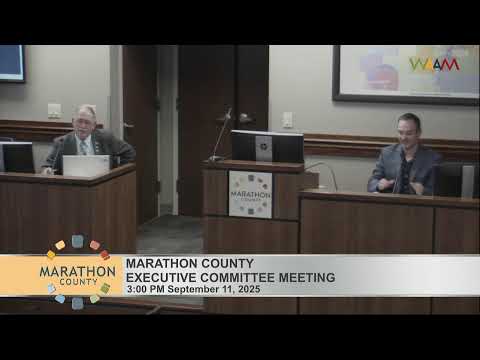
Marathon County data officer unveils KPI dashboard prototype, aims for February 2026 public rollout
Summary
County data officer Michael presented a working prototype of departmental key performance indicator dashboards built on the Marathon County Pulse platform, said the county has identified 240 KPIs, will publish roughly 50 first, and set a target public launch of February 2026.
Michael, the county data officer, presented a prototype of a departmental performance dashboard and told the Marathon County Executive Committee she intends to publish an initial set of indicators by February 2026.
The presentation centered on a dashboards framework modeled on Montgomery County, Maryland’s county stats site but scaled and built in-house using the Marathon County Pulse platform. Michael said the county has identified 240 potential key performance indicators (KPIs) and plans to publish about 50 budget-related KPIs first.
Why it matters: the dashboard is intended to give the public, county leaders and department managers clearer measures of “how much did we do,” “how well did we do it,” and “is anyone better off,” the results-based accountability questions Michael cited. County Administrator Leonard said the tool would help make programs and costs more transparent to the public and the board.
Michael said she completed training on the Pulse platform in June 2025 and built a mock-up that includes department pages and program-level KPIs. Using Meals on Wheels (served by the Aging and Disability Resource Center of Central Wisconsin) as an example, she showed a five-year line graph, a downloadable CSV dataset and program context text supplied by the ADRC. Michael said the “how well” and “is anyone better off” panels are still being developed for many programs.
The county considered buying an external commercial dashboard platform; Michael and Leonard told the committee vendors quoted about $263,000 for a three‑year contract. To reduce cost, Michael proposed building the dashboard internally on Pulse (the county’s existing partner platform) and doing the work with a small in-house data team. Leonard described the county’s data team as a team of one and said the county would “get there” incrementally rather than purchasing the expensive external option.
Committee members asked about data standardization, cross‑county comparisons and whether the county would coordinate with partners such as North Central Healthcare. Michael said standardization is a major task: different case managers and departments currently log data in inconsistent ways (Excel, Word, personal notes), and the data officer role includes developing consistent logging practices and code-based reports. She said once datasets are standardized, the county can do more sophisticated analyses and explore AI‑enabled tools in the future but that AI is not an immediate element of the rollout.
Leonard and members discussed how the dashboards will support program evaluation (example: treatment court outcomes, Family Keys employment tracking), departmental resource decisions, and public transparency. Leonard noted the county will use the tool to compare metrics with other counties where possible and that some comparative datasets (e.g., Wisconsin Circuit Court Access) required licensing to access.
What’s next: Michael said she will publish the initial set of KPIs as soon as feasible and that her target for a public rollout is February 2026. She asked committee members to expect iterative releases and to help prioritize “quick wins” — indicators that already exist in usable form. Leonard and Michael said the rollout will be incremental and depend on data cleanup, access to department systems, and staff cooperation to standardize inputs.
“Once we standardize that, once we build that foundation, now we can start to have those better conversations about how AI might play a role in the future,” Michael said during Q&A. Administrator Leonard added that the dashboard will help the public and board better understand program costs and outputs.
Ending note: the committee thanked Michael and Leonard for the work; no committee vote or formal action was taken. Michael will continue development and provide further updates during budget and committee meetings leading up to the February 2026 target.