Get Full Government Meeting Transcripts, Videos, & Alerts Forever!
Get email alerts on the Homelessness topic
No spam. Unsubscribe anytime.
Terre Haute mayor announces warming-center, homelessness task force as council withdraws sleeping-on-sidewalk ordinance
Summary
Mayor Sackman announced a warming-center working group and a joint housing, homelessness and mental‑health task force and the City Council voted to withdraw General Ordinance 12, a proposed prohibition on sleeping in rights-of-way. The mayor and several providers said the city will pursue coordinated services rather than criminal penalties.
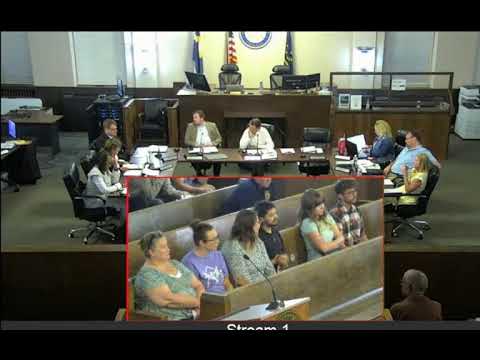
Mayor Sackman announced two new initiatives to address a rising homelessness problem in Vigo County and the City Council withdrew a proposed ordinance that would have prohibited sleeping on sidewalks and in doorways. The council voted to withdraw General Ordinance 12 on Sept. 11 after more than an hour of public comment and discussion; the motion to withdraw was moved by Councilperson Chalos and seconded by Councilperson Loudermilk and the council voice vote was recorded as all in favor.
The mayor told the council that “Overcoming poverty isn't about charity. It's about justice, dignity, and ensuring every neighbor has the chance for a decent life,” and described two new city efforts: a warming-center working group to coordinate cold‑weather responses and a housing, homelessness and mental‑health task force led jointly by the mayor and the council. The mayor said the task force will include city and county leaders, service providers, housing and behavioral‑health leaders and people with lived experience; he said the council could appoint two to four members and appointments would be year‑long.
Why this matters: city officials and service providers said homelessness is growing locally and that criminal enforcement without shelter options produces repeated court contacts and higher public costs. At the meeting, the mayor contrasted the HUD point‑in‑time count with a regional count and said local advocates estimate the broader total at about 787 people in Vigo County when including those doubled up, in jail or in hospitals. The mayor and multiple providers urged investment in prevention, rapid rehousing and supportive services, not fines.
Public service providers described capacity limits and needs. Jess Malone, director of homeless services at Mental Health America, said the Lotus Center shelter has 52 beds and that about 170 individuals had been assisted there this year; she said roughly 100 people served by outreach teams were chronically homeless and that many clients face barriers such as prior evictions, disability and insufficient income. Emily Murray, executive director of Council on Domestic Abuse (CODA), said domestic violence is a major local cause of homelessness and that emergency shelter, case management and long‑term supports are costly and required.
Several speakers, including community health worker Amanda Perry and outreach worker Ismeen Kelly, urged policies based on “housing first,” low‑barrier shelter options and coordinated outreach that build trust with people experiencing homelessness. Mental health and addiction treatment providers told the council that mental‑health crises and substance use disorders frequently require different interventions and that the city needs both short‑term crisis capacity and long‑term housing solutions.
City officials and staff described next steps and limits. The mayor said the task force should develop a standard operating procedure for cold‑weather response and clearer communication channels among shelters, police and nonprofits. He acknowledged federal funding uncertainties and said some housing funding historically comes through HUD programs such as HOME; he also said redevelopment and county participation will be part of the discussion. The mayor noted the filing of General Ordinance 12 had generated public attention and that withdrawal “does not mean inaction.”
Legal and enforcement context: City Attorney Mike Wright addressed recent park enforcement. He said parks are governed by city code section 5‑83 (hours of operation) and that recent focused patrols addressed vandalism and after‑hours use; he said the city has not collected fines from those park cases and that many tickets have been dismissed. Councilmembers and public defenders warned that ticketing or fines for sleeping can push people into the criminal justice system and create barriers to housing and services.
What the council decided: The council formally withdrew General Ordinance 12 (the proposed prohibition on sleeping in rights‑of‑way), and the mayor said the administration will proceed with the two initiatives and invite council participation. The mayor asked council members to identify volunteers to serve on the task force; he said the administration has draft outlines for the two working groups and prefers speed over an ordinance to create them.
Next steps and open questions: The task force's composition and timeline will be developed by the administration and council; the mayor said appointments would be year‑long and that the city will engage county leaders and service providers. Funding and full implementation depend on coordination with county government and the availability of federal and state grants; the mayor cautioned federal HUD appropriations and HOME program funding may be affected by national budget actions this fall.