Get Full Government Meeting Transcripts, Videos, & Alerts Forever!
Get email alerts on the Prosecutor Appointment topic
No spam. Unsubscribe anytime.
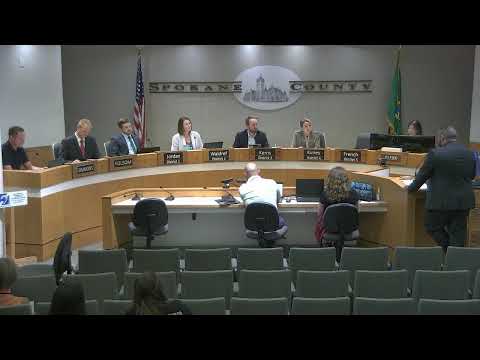
Board interviews three nominees for Spokane County prosecutor; executive session follows, no appointment announced
Summary
The Spokane County Board interviewed three nominees for the county prosecutor vacancy Sept. 9 and then entered an executive session to evaluate qualifications; no appointment was announced in the public record.
The Spokane County Board of County Commissioners interviewed three nominees on Sept. 9 to fill the county prosecutor vacancy: Marshall Casey, Steve Garvin and Preston McCollum. The board announced it would evaluate candidates’ qualifications in executive session following the public interviews; no appointment or final decision was recorded in the meeting transcript.
Marshall Casey, an attorney in private practice, said he entered the process to provide an alternative choice and emphasized community engagement, partnerships with schools and outreach to juveniles. "What we need is more engagement with the rest of the community and more partnership," Casey said. Casey acknowledged he has not worked as a prosecutor but cited litigation and management experience in private practice and the banking sector.
Steve Garvin, a longtime prosecutor and later state attorney general staff attorney, framed his candidacy around what he described as an urgent public‑safety problem in Spokane County. Garvin said the county faces a "public safety apocalypse" and repeatedly cited a backlog of unfiled felony cases: "My estimate ... it's north of 600 unfiled felony cases," he told the board. Garvin described a 30‑year criminal practice that includes about 172 jury trials and 17 murder trials and said immediate priorities would include identifying and addressing unfiled cases, prioritizing chronic offenders, and expanding treatment‑oriented programs such as drug court.
Preston McCollum, the acting Spokane County prosecutor and current chief criminal deputy, described his immediate priorities as securing funding and staffing levels, increasing transparency and supporting therapeutic courts. McCollum said he is working on public‑facing dashboards of office metrics and described efforts to streamline court paperwork and improve internal workflows: "We're working on getting public facing dashboards that are gonna be on our website similar to what the jail has," he said. He also emphasized collaboration with judges, jail staff and municipalities.
The interview format: the board took turns asking candidates a round of pre‑distributed questions. Commissioners asked about candidates’ management experience, priorities, approaches to metrics, collaboration with other jurisdictions, and strategies to connect defendants to drug and mental‑health treatment. Candidates repeatedly cited the need to balance prosecutorial priorities with protecting individual rights and the constraints of county resources.
After the interviews the board moved to an executive session under the Washington Open Public Meetings Act to evaluate qualifications of candidates (RCW 42.30.110(1)(h)). The transcript records the start of a roughly 10‑minute executive session; the public transcript ends with the board entering that closed session and does not record any appointment or subsequent action.
Why it matters: the prosecutor’s office combines criminal‑prosecution duties and civil counsel responsibilities for county government. The new appointee, if selected, would set priorities on public‑safety prosecutions, backlog management, and engagement with diversion and treatment programs that affect jail population and public spending.
Meeting context: the interviews were held during the consent‑agenda meeting and each candidate was allotted up to 30 minutes for questions. Commissioners present included Commissioner Jordan and Commissioner French (participating remotely); the board stated all five commissioners were present.
For follow up: the board’s next public minutes or meeting notice may record any subsequent appointment or a public vote; interested parties should consult the county clerk’s published agenda and meeting minutes for the formal appointment action.