Get Full Government Meeting Transcripts, Videos, & Alerts Forever!
Get email alerts on the Transportation Finance topic
No spam. Unsubscribe anytime.
Consultants present 20‑year transportation sales‑tax review; council creates standing committee for next phase
Summary
Consultants told Charleston County Council that two voter‑approved transportation sales taxes have produced roughly $3.4 billion in local revenue and, with state and federal matches, about $4.56 billion in infrastructure investment since 2004; council created a standing committee to guide public engagement for the next phase.
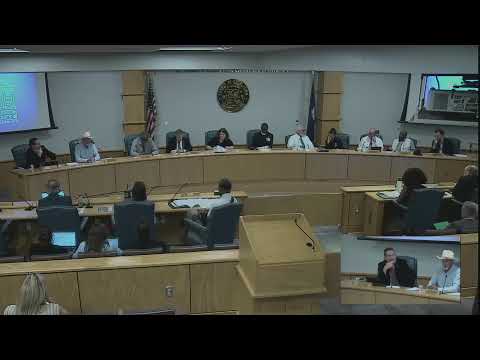
Consultants hired by Charleston County presented a high‑level review of two voter‑approved transportation sales‑tax programs and recommended a transparent public‑engagement process to inform decisions about a possible next phase. The consultant team said the sales tax is on track to generate about $3.4 billion in dedicated local revenue and that matching state and federal funds have leveraged roughly $1.17 billion, producing about $4.56 billion in total infrastructure investment since 2004. Council received the report and the chair announced creation of a new transportation sales tax (TST) standing committee to shepherd community engagement and planning.
"Over the past 20 years, Charleston County voters have twice approved the transportation sales tax, making historic investments in infrastructure improvements," said Peter Lamott, president of Chernoff Newman, in his presentation. Ryan Brown, vice president for public affairs with the firm, presented program totals and usage breakdowns: the consultants reported roughly 62% of program funding dedicated to transportation infrastructure (nearly 1,000 miles of road improvements, bike lanes, pedestrian pathways and major intersection upgrades), 25% to public transit (including support for CARTA and rapid transit) and 13% to greenbelt and land preservation programs. Brown told council the program has supported 66 million passenger trips and a 226% increase in service miles for public transit since the early 2000s.
The consultants urged a transparent, community‑engaged process to evaluate "current and future needs, and the available resources and challenges" and presented a public hub at charlestontransportation.com for more detail. "We believe that this process must be transparent and must ensure ample community input and engagement and clear communications of facts and choices," Lamott said.
Following the presentation, the council chair directed the consultants to continue community engagement and announced the establishment of a TST standing committee composed of council members; the committee’s first meeting was scheduled for Sept. 25, 2025. The chair said former South Carolina Department of Transportation Secretary Christy Hall will guide the initial discussion of investment priorities at that meeting.
Council members signaled support for public outreach and for using the report as a foundation for future deliberations; the chair said the standing committee will ensure the program is handled publicly and with accountability. The report and online hub will be used in upcoming public meetings, outreach to municipalities, and county communications.
The presentation was informational; no binding commitment to a tax extension or new referendum was made at the meeting. The standing committee will meet publicly and return recommendations to the full council as the process proceeds.