Get Full Government Meeting Transcripts, Videos, & Alerts Forever!
Get email alerts on the Government Form topic
No spam. Unsubscribe anytime.
Commissioners and residents debate strong-mayor plan, citing MSU report and checks-and-balances concerns
Summary
Public speakers and several commissioners argued both for and against replacing Lansing’s current system with a stronger mayor; commissioners cited an MSU report in defense of the strong-mayor approach while critics urged more deliberation and potential reconsideration.
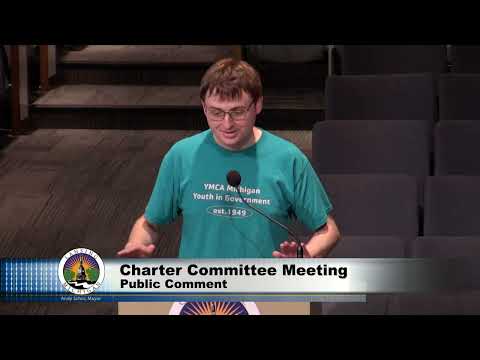
Public commenters and commissioners used the Sept. 11 Lansing Charter Commission meeting to revisit the commission’s proposed shift toward a stronger mayoral system, invoking a Michigan State University report and sparring over whether the city should instead adopt a city-manager form of government.
Resident Stan Shuck told the commission he was “disenchanted” by prior meetings and criticized a post-meeting media interview in which, he said, a commission member expressed support for a strong-mayor plan. Shuck said many voters he spoke with wanted a city-manager option or language explicitly enabling appointment of a city manager.
Several public commenters urged the commission to step back and allow fuller public discussion. Eric Elmquist, who said he had served under both forms of government, criticized the commission’s decision-making pace and urged the panel to “take it back and get it right.” Elmquist said the MSU analysis had been selectively cited and argued the commission should do more work before submitting a change to voters.
Commissioners who supported the strong-mayor direction referenced the MSU report to frame Lansing within comparable capital cities. One commissioner read verbatim from the MSU material, saying the study found that “in all U.S. capital cities, 56% supported the strong mayor form of government with 44% supporting the city-manager form of government,” and that among similarly sized capitals “5 of those cities are strong mayor.”
Commissioner Washington explained her opposition to the proposed charter revision: “I just want to take a moment to explain why I voted for the strong mayor. I believe in checks and balances. And when you have a city manager and a council, you do not have checks and balances.” She also said she was not confident in a council-run system because the public may not have the information to evaluate council candidates.
Commissioner Boyd said he entered the process with an open mind, conducted outreach and conversations with former local officials, and concluded that a strong-mayor form fit Lansing’s circumstances. Boyd said that, in his view, a city manager requires a cohesive council that he did not believe Lansing currently has.
No formal change to the city charter was adopted at the meeting; the commission’s business that evening centered on outreach and education for the ballot. The debate underscored continued disagreement among commissioners and members of the public about the optimal structure of city government and whether the commission should refine the draft language before it goes to voters.