
Ohio Public Defender outlines county options as Lorain County discusses forming a public defender office
Get AI-powered insights, summaries, and transcripts
Subscribe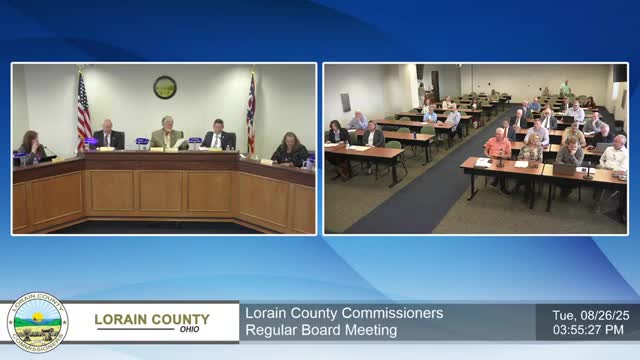
Summary
Representatives from the Ohio Public Defender's Office described legal options, reimbursement practices and data used for indigent defense while local attorneys and residents offered contrasting views about costs and quality of court‑appointed counsel versus a county public defender office.
State Public Defender Elizabeth Miller and Laura Austin of the Columbus office visited the Lorain County commissioners on Aug. 26 to brief the board on methods available under Ohio law for delivering indigent defense and on statewide reimbursement and data resources. Miller opened by apologizing for a scheduling miscommunication and said the office is "committed to being a good partner" to counties and local stakeholders.
The presenters reviewed the options in Revised Code Chapter 120: county public defender commission/offices, court‑appointed counsel (used in all counties), contracts with non‑profit corporations, contracting with the state public defender (an option the state office said it cannot expand now because of capacity), and joint county public defender offices. They described reimbursement procedures and data tools the state maintains, including an annual 120.041 report and an online appointed‑counsel billing system rolling out to more courts.
Miller and Austin emphasized that the county commissioners decide which delivery model to use and that a county public defender commission would be a five‑member board (three commissioners' appointees; two judges' appointees), would meet quarterly and would recommend an operating budget subject to the commissioners' approval. The presenters said operating expenses for a public defender office — salaries, benefits, facilities and equipment — are eligible for reimbursement under the statewide program and that the current projected reimbursement rate for appointed counsel and public defender operations is about 82 percent, set annually based on legislative appropriations.
Public comment: attorneys who represent many court appointments urged caution and asked for more data and engagement with the local bar. Brandon Oliver, president of the Lorain County Bar Association, said the county currently receives what he described as high‑quality representation through the appointed‑counsel system and that the bar wanted more information before recommending change. Zach Simonoff, a criminal attorney with 26 years' experience in Lorain County, described training and appointment rules that he said support the current system and urged analysis of costs and logistics before reshaping delivery.
Other commenters favored moving toward a county public defender. Aiden Fogle, a Sheffield Lake resident, said a public defender office would provide "accountability" and consistent representation and warned that heavy caseloads can lead to poorer client outcomes. Several commissioners said the presentation was the start of an ongoing conversation rather than a decision.
Data and clarifications discussed in the meeting included: county spending of about $3.6 million on court‑appointed counsel in the previous 12 months, of which county taxpayers bore roughly $600,000 after state reimbursement; the state public defender's office processes roughly 140,000 paper bills per year and is rolling out an online system; administrative rules set caseload caps for full‑time attorneys (for example, a 150‑felony cap referenced for reimbursement purposes); and counties may phase implementation or limit a new public defender office's initial scope to particular courts. Miller and Austin offered to provide county‑level data, examples from other Ohio counties and follow‑up meetings with the bar, judiciary and county staff.
No vote or formal action to change the county's indigent defense delivery was taken at the meeting; commissioners instructed staff to continue information‑gathering and to consult with local stakeholders.