Get Full Government Meeting Transcripts, Videos, & Alerts Forever!
Get email alerts on the Cannabis Zoning topic
No spam. Unsubscribe anytime.
Tucumcari officials weigh conflict between city cannabis zoning and state grower licenses
Summary
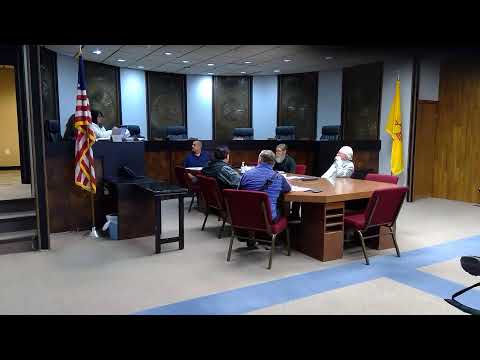
At a City Commission work session, staff described a conflict between the city—s cannabis ordinance and state-issued cultivation licenses for properties zoned C-1; commissioners directed staff to notify growers to pause production, research state rules, and involve legal counsel.
TUCUMCARI — City staff told the Tucumcari City Commission at a work session that several state-issued cannabis cultivation licenses appear to have been granted for properties in C-1 zones even though the city—s current ordinance does not authorize growing in C-1 or C-2 areas.
The discrepancy was raised by the community development director, who presented the commission with the original and amended cannabis ordinances, a map of city zoning and licensed dispensary locations, and a list of businesses and the license classes they had applied for. Staff said they discovered the possible conflict while researching permit applications and that four operators may already hold state grower licenses for properties the city zones as C-1.
City staff said code enforcement has been instructed to notify operators who are preparing greenhouse cultivation to hold off while the issue is researched, and commissioners asked staff to check state statute and the state cannabis-control regulations and to involve the city attorney for next steps. The ordinance in the commission—s packet (amended in February 2022) lists which classes of cannabis activity are permitted in each zone and includes enforcement language and penalties.
Why it matters: the apparent mismatch between state licensing and local zoning raises immediate enforcement questions, could affect operators who report sizable investments, and, according to staff, has raised concerns at the Tucumcari wastewater treatment plant about greenhouse wastewater affecting treatment processes.
What the ordinance and staff materials show - Staff identified sections of the city—s cannabis ordinance that specify which classes of cannabis establishments may locate in which zoning categories and noted that the currently effective ordinance does not authorize cultivation in C-1 or C-2 zones. - The amended ordinance (adopted in February 2022) and staff—s handouts include a 300-foot buffer requirement: cannabis consumption areas and certain other cannabis facilities may not be located within 300 feet of an existing school or daycare in place when the permit is granted. The packet also described standards for designated cannabis consumption areas, including separate HVAC and signage requirements and compliance with the Dee Johnson Clean Indoor Air Act.
Staff—s findings and immediate steps - Staff said they found four licensees who applied to the state and received grower permits for properties that are zoned C-1; staff did not provide a complete, verified list during the session but said the clerk will provide one. - Code enforcement has been asked to notify any growers operating or preparing to operate in C-1 that they should pause pending further direction. - Commissioners asked staff to research whether other municipalities permit commercial-scale cultivation in commercial zones similar to Tucumcari—s and to compile relevant state statutes and administrative rules from the state—s cannabis-control authority. - The commission asked the city attorney to prepare any necessary enforcement letters; staff indicated the commission also has the municipal authority to terminate city-issued business licenses under the ordinance.
Enforcement, penalties and court limits - Staff pointed out that section 10 of the city ordinance lists penalties for violations and that, under the ordinance, each day a violation occurs may be treated as a separate offense. Staff said the ordinance includes a fine (noted in packet as up to $500 per day) and the possibility of jail, but the office present reported constraints in local court capacity — specifically, a lack of a public defender for municipal cases — that could limit the practical use of custodial sentences in some prosecutions.
Other operational concerns - A city staff member raised wastewater-treatment concerns, saying greenhouse wastewater has disrupted biological processes at the treatment plant; staff indicated the wastewater superintendent had warned of significant operational impacts. - Commissioners expressed concern that allowing cultivation more broadly in C-1 zones could place production near residential districts in some parts of town and could lead to follow-on requests to change hours or other operations.
Next steps - Staff will research state statute and administrative rules governing cannabis licensing, survey practices in comparable municipalities, obtain a list of state grower licenses that appear to conflict with local zoning, and work with legal counsel to draft enforcement or notification letters as appropriate. - Code enforcement will be asked to follow up with any operators who appear to be cultivating in C-1 while the city completes its review.
No formal vote was taken during the work session. The commission did not adopt changes to the ordinance at the meeting; members discussed options for public hearings and the process that would be required to amend zoning or the ordinance in the future.