Get Full Government Meeting Transcripts, Videos, & Alerts Forever!
Get email alerts on the Sewer Ordinance Responsibility topic
No spam. Unsubscribe anytime.
Tucumcari staff review sewer ordinance after disputed repairs, call for clearer homeowner/city responsibilities
Summary
City staff and commissioners discussed inconsistent language across city ordinances about who must repair sewer laterals and repave streets after private repairs. Staff will review ordinances, pursue GIS mapping of utilities and explore a cost schedule and policy changes to reduce confusion and public-health risk.
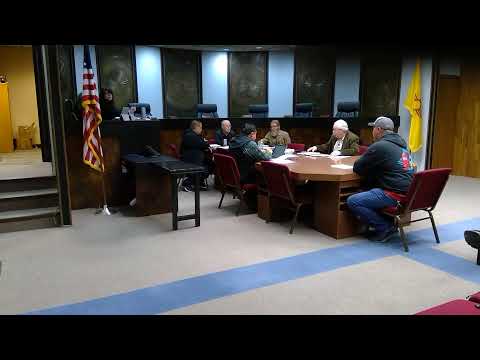
TUCUMCARI — City staff and commissioners spent a lengthy work-session discussion clarifying whether homeowners or the city must repair sewer laterals and restore roadways after private or contractor work, and asked staff to prepare unified ordinance language and cost options.
The discussion began when city staff presented a packet and asked the group to “attempt to review the sewer ordinance,” noting repeated local incidents in which homeowners, contractors and the city disagreed about who must dig to the tap, who must repair pavement and who pays for those repairs. “We can get, an attempt to review the sewer ordinance,” a staff member said, introducing the item.
The issue matters, officials said, because inconsistent ordinance language has left residents uncertain and has led the city to perform repairs in some cases. City staff and commissioners described a recent East Side incident in which a homeowner’s repaired lateral collapsed in the street, creating a backup and sewage running into a yard; the homeowner resisted paying to dig into the paved street to finish the repair. The packet included excerpts cited as the basis for the city’s current interpretation.
The basic legal text cited during the meeting included multiple, differently worded provisions. A staff speaker pointed to “the buildings and construction code” and a city order identified in the discussion as “15.0.2 0.03 — Responsibility for plumbing repair.” Another staff excerpt was identified verbally as “building sewers 13 o 8 dash 100 c.” Participants also referenced state code and earlier local practice.
Commissioner Thorne and other officials said the language is inconsistent across ordinances and open to misinterpretation. “There's nothing that is consistent throughout the ordinances on that,” a staff member said. Commissioner Thorne asked for clearer definitions of property line and responsibility, noting that in many plats the property line can be the middle of the street or alley and that the city has in some years exercised different practices.
City staff described existing operational practices and limits: the city supplies a saddle (a fitting for tapping the main) when a customer or contractor comes to the main, but staff said they have not allowed private contractors to make the taps themselves. “We will provide [saddles]. Every time they call, we provide it. No problem,” a staff member said. Staff also said they have in some cases installed cleanouts on private property to prove whether a customer-side line was clear when residents repeatedly reported backups.
Officials discussed permitting and enforcement: multiple speakers noted that permits are required to work in the street and that digging in paved right-of-way without a permit should be enforced. A staff member noted the municipal practice of requiring permits under the building-sewers code: “It does say in your permit required under building sewers.”
Cost examples and operational constraints were offered in the discussion. Staff estimates cited during the meeting included the city charging $400 for a tap in some cases, an approximate city cost near $1,000 to dig 10 feet in the street on one repair, and a $3,400 figure cited for activation of a small asphalt plant; another staff member referenced a $368,000 sewer truck used to keep the mains flowing. A public-works staffer said cold-mix materials (blue bags) can cost “$10,000 for a truckload,” and that a local hot-mix plant charges a flat fee (about $3,500) to fire up production in addition to material costs.
Staff said mapping limitations make it harder to know when private work will cross the city’s infrastructure. The group discussed turning existing hand-drawn maps and disparate records into a GIS layer and reported a state sanitary-survey requirement: staff said the city was working to have maps entered in the GIS and that the lack of detailed, digital sewer-collection maps is a known deficiency the city is addressing. “They’re supposed to send somebody to input the maps that we have into the GIS system,” a staff member said.
Policy options the group raised included: (1) standardizing ordinance language to define property-line responsibility consistently across codes; (2) requiring permits and enforcing penalties for unpermitted street excavations; (3) adopting a formal policy or charge schedule for city crews to perform repairs and bill property owners; (4) requiring use of the city’s saddle fittings when connecting to clay or concrete mains to avoid destabilizing older pipes; and (5) improving mapping and emergency-response plans for high-risk locations.
No formal vote or ordinance change occurred during the session. Instead, the commission and staff agreed to pursue follow-up work. A commissioner asked staff to research how similarly sized municipalities handle lateral responsibility and to return recommendations. One commissioner suggested the city manager “work with some different options.” Staff committed to compiling cost estimates, drafting uniform ordinance language that clarifies “property line” definitions for water and sewer, and advancing GIS mapping of the sewer system so crews can locate mains and laterals more reliably.
Officials said clarifying ordinance language and developing a transparent cost/reimbursement schedule would help homeowners, reduce repeat complaints and mitigate public-health risks when backups occur. The manager and utilities staff next steps include legal review of existing ordinances, outreach to neighboring municipalities for examples, producing a proposed charge or payment schedule if the city performs emergency repairs, and a plan to implement GIS mapping of utilities.