
Lapeer planning commission discusses broad zoning text amendments covering signs, screening, landscaping, parking and dumpsters
Get AI-powered insights, summaries, and transcripts
Subscribe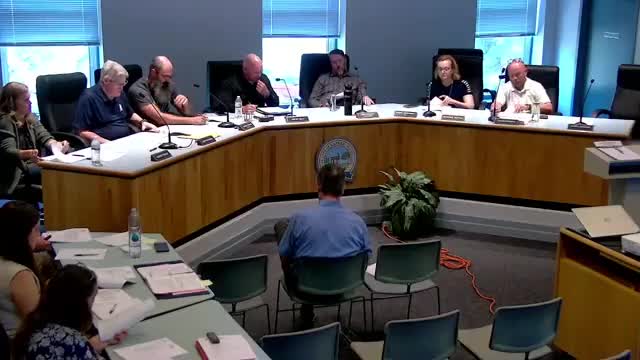
Summary
City planning staff led a wide-ranging discussion of potential text amendments to the Lapeer City Zoning Ordinance at the July 10 Planning Commission meeting, covering mechanical equipment screening, signage rules, landscaping and tree-replacement requirements, parking standards and waste-container screening.
City planning staff led a wide-ranging discussion of potential text amendments to the Lapeer City Zoning Ordinance at the July 10 Planning Commission meeting, covering mechanical equipment screening, signage rules, landscaping and tree-replacement requirements, parking standards and waste-container screening.
Ben, the city planner, said the list is a "running list" compiled from past planners and staff notes and that the department wants the commission's feedback before packaging amendments for a single public hearing. He told commissioners the goal is to clarify intent, remove stray notes and prepare draft language that reflects the commission’s expectations.
Mechanical screening: Commissioners agreed rooftop mechanical equipment should be universally screened if visible from the right-of-way, and that privacy fences should be allowed for ground-mounted HVAC screening but not for rooftop equipment. Ben said the ordinance includes separate standards for required versus nonrequired fences; required screening typically has stricter material and height standards.
Signage and temporary signs: Staff presented proposed changes to banner and flag sign permitting and temporary-sign tables. Commissioners discussed enforcement challenges if no permit is required, and whether permits could be free rather than eliminated. The commission asked staff to research quantity limits for banner/flag signs and to preserve some permitting path to aid enforcement. Ben and others noted that content-based regulation of political signs is constrained by Reed v. Gilbert; the transcript records staff cautioning that the city cannot regulate sign content.
Monument signs and window signs: Planning staff recommended clarifying how monument sign height is measured (including the sign base and consideration of surrounding topography). Commissioners supported removing window-size coverage limits to be more business-friendly, while keeping entrances and doors free of signage for safety.
Tree replacement and landscaping: The commission discussed replacing removed trees on a caliper-inch basis (current language requires partial replacement percentages) and considered moving to a one-for-one replacement standard for commonly removed trees while requiring multiple replacements for very large specimen trees. Commissioners also favored incentives to preserve existing trees and asked staff to propose clearer waiver processes for situations where multiple landscaping requirements overlap (for example, parking-lot landscaping plus buffer requirements).
Parking and striping: Commissioners discussed parking waivers and deferments. Ben noted the ordinance already allows deferments to the planning commission when applicants can show reduced parking demand and asked that the deferment language be made easier to find. The commission expressed support for allowing targeted waivers (for example, in certain zoning districts or constrained sites) but resisting waivers that would worsen downtown parking shortages. The commission agreed that when a parking lot undergoes maintenance or restriping, it should be brought into compliance with the city's double-line striping standard; if an existing single-line lot is in good condition it need not be re-striped until maintenance is required.
Waste receptacles and enclosures: Commissioners said many dumpsters in the city are unscreened or in disrepair. Staff recommended allowing acceptable fence materials (excluding chain link) as an enclosure option to lower cost barriers while keeping material standards; commissioners also discussed shared enclosures for multi-tenant sites and requiring that enclosure doors remain closed except when being serviced.
Procedural notes and training: Ben asked commissioners to flag any additional amendment ideas. The commission also discussed training opportunities (Michigan Planning conference) and the possibility of adopting a modest annual training expectation for commissioners.
Next steps: Staff will draft specific ordinance language guided by the commission's direction, consolidate related amendments into a public-hearing packet and return to the commission for a public hearing and formal action. Several commissioners asked staff to return with proposed text that specifies: acceptable fence materials for screening, a time limit or permit approach for temporary signs, clearer monument-sign measurement language, one-for-one tree replacement options with exceptions for large specimen trees, and a clear process and standards for parking and landscaping waivers.
No formal ordinance changes were adopted at the meeting; the item was a policy-level discussion intended to shape draft text amendments for future hearings.