Get Full Government Meeting Transcripts, Videos, & Alerts Forever!
Get email alerts on the Public Art Inclusivity topic
No spam. Unsubscribe anytime.
Delray Beach asks residents and private funders to develop proposals for a new public art alternative to removed rainbow crosswalk
Summary
After public outreach, commissioners agreed to allow residents and private stakeholders to pursue privately funded memorial or public‑art proposals and to return to the commission when specific proposals are assembled; staff noted the public art advisory process and legal review will determine the city’s role.
The Delray Beach City Commission on Oct. 14 heard a staff summary of an Oct. 1 public engagement session and then debated whether a replacement for the removed rainbow crosswalk should be a city‑funded installation on public land or a privately funded artwork on private property.
Parks and Recreation Director Sam Mitad and Public Works Director Missy Barletto summarized the Oct. 1 session: about 25 residents attended, staff recapped earlier design concepts and the public offered dozens of ideas including renaming Bridal Street, a pyramid sculpture or statue, lighting the water tower, a mural on the Old School Square garage, banners and a permanent public art feature. Participants also raised vandalism prevention, private funding, and siting concerns.
Commissioners and staff said public sentiment at the outreach meeting included both strong advocates for a visible public symbol of inclusion and residents who opposed city funding or public‑property siting. Commissioner Long and others said the original intersection treatment served as a visible civic pledge of inclusion and favored a public display, while Commissioners Cassale and Markert urged privately funded options and said private property would limit city exposure and ongoing cost. Barletto and staff reminded commissioners that privately funded public art or murals on private property still require city review — including the Public Art Advisory Board and legal review — and that placement on public property would trigger the city’s public‑art process.
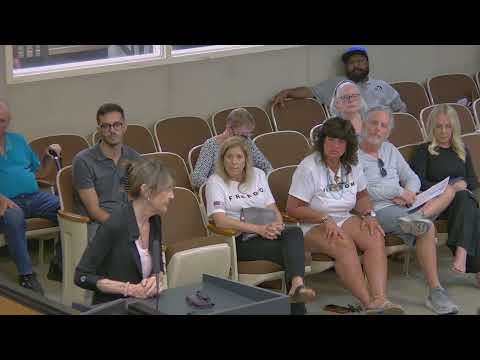
Multiple public speakers urged the commission to replace the crosswalk with a prominent public work: Chris Rhodes, representing Equality Florida’s supporters in Delray, asked for a prominent civic statement of welcome; Nicholas Coppola (Palm Beach County Human Rights Council) and other residents urged a visible public memorial that would signal inclusivity. Other residents urged private funding, expressed concern about use of public funds for a single group, or asked that any installation avoid obstructing traffic and be resistant to vandalism. Some speakers asked for legal protections that would preserve an artwork placed on private property if the property later sells.
The commission reached a practical consensus: allow residents and stakeholders to advance privately funded proposals for a permanent symbol (sculpture, mural or other installation) and return to the commission with specific proposals once funding and a site are identified. The city manager’s office said it will accept updates and that the Public Art Advisory Board will review proposed works; staff also said the city will provide a briefing to commissioners when a concrete proposal, funding source and site are presented. Commissioners emphasized that the city’s role — if any — will depend on whether the proposal is on public property, requires permitting or requests public funding.
No ordinance or budget appropriation was approved at the workshop. The commission’s direction was procedural: residents and private stakeholders may organize and fund proposals and present them to the city for review and potential permitting or public‑art consideration.
Speakers quoted in this article spoke during the staff recap and public‑comment period of the Oct. 14 workshop and are attributed according to the meeting transcript.