Get Full Government Meeting Transcripts, Videos, & Alerts Forever!
Get email alerts on the Historic Preservation topic
No spam. Unsubscribe anytime.
Commission adopts rules to allow adaptive reuse of historic places of worship over staff objections from one commissioner
Summary
The Delray Beach City Commission on Oct. 14 adopted zoning and comp‑plan amendments to allow limited adaptive reuse of historic places of worship into detached single‑family residences, subject to Historic Preservation Board review.
The Delray Beach City Commission on Oct. 14 adopted a series of changes to the comprehensive plan and the land-development regulations to allow adaptive reuse of historic places of worship in the Community Facility (CF) zoning district, including the possibility of converting such properties to detached single-family residences under narrowly defined conditions.
The amendments add policies to the Historic Preservation Element and Neighborhoods/Districts and Corridors Element of the city’s comprehensive plan and change CF zoning provisions to create a permitting path for adaptive reuse of historic places of worship. The code changes include development standards and a requirement for Historic Preservation Board (HPB) review before reuse, and clarify that exterior changes remain subject to historic-design review and the Secretary of the Interior’s standards.
Jeff Costello, the applicant’s planning consultant, described the proposal as a narrowly tailored tool to preserve and reuse a limited set of historic religious structures across the city and pointed commissioners to examples where such conversions had preserved buildings and returned them to active use. Anthea Genetis, Development Services director, summarized staff analysis and noted that the HPB and planning staff had worked on language and recommended findings.
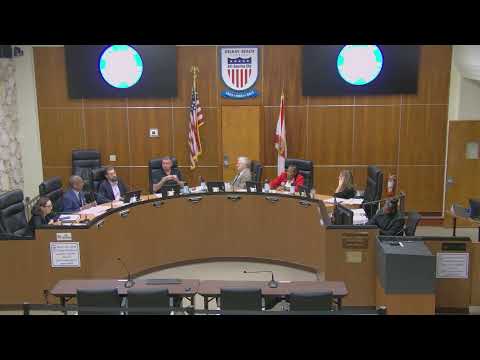
Commission debate focused on process and safeguards. Commissioner Cassell and Vice Mayor Rob Long supported the measures, noting HPB oversight and a limited geographic and use scope. Commissioner Burns said she preferred a different path at first reading but acknowledged that the applicant had followed the commission’s direction. Mayor Thomas Carney said he did not believe the ordinance language was ready and voted no on second reading.
The ordinances were adopted on second reading after discussion; the record shows at least one dissenting vote by Mayor Carney. The Historic Preservation Board had unanimously recommended approval during its review; planning staff also recommended approval with the HPB’s input.
What it changes: the amendments permit adaptive reuse of qualifying historic places of worship to become detached single-family residences where the buildings meet HPB criteria and historic-preservation review finds the reuse preserves the property’s historic character. Any exterior changes continue to require HPB review under the city’s historic preservation guidelines.
Commissioners and staff said the measure is intended to add a preservation tool for historic religious properties that are no longer used for worship, while keeping exterior and design review under the HPB’s authority.