
HDC OKs rooftop solar only on rear roof at 41 Macy's Lane; front panels rejected
Get AI-powered insights, summaries, and transcripts
Subscribe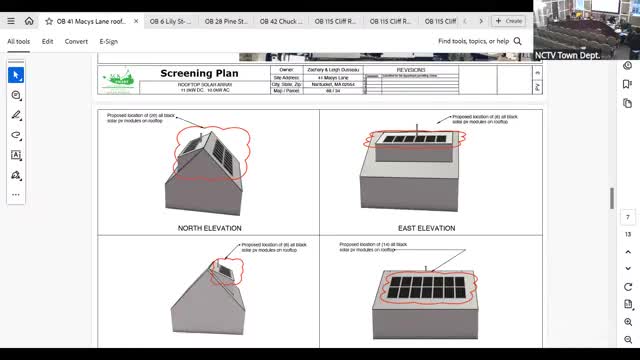
Summary
The commission approved solar panels on the rear roof plane at 41 Macy's Lane and rejected the proposed front, street‑facing panels, after commissioners said the front installation conflicted with HDC guidance.
The Nantucket Historic District Commission unanimously approved solar panels on the rear roof plane at 41 Macy’s Lane but rejected panels that would face the street, citing the commission’s guidelines favoring secondary roof surfaces for solar installations.
Tobias, presenting for the applicant, described the proposal as a modest rooftop array and said the roof color would be black. Commissioners who visited the site said the house sits close to Macy’s Lane and the panels as proposed would be highly visible from the road. Commissioner Val said the tree indicated on the plan “isn’t going to screen anything,” and several members said the examples submitted by the applicant did not match the visibility at this property.
Commissioner Ray noted HDC practice favors panels on dormers, shed roofs, or other secondary masses rather than the primary façade because those placements have lower visual impact. Tobias said a ground array would typically be “20–25% more expensive” because of steel and wiring, and discussed potential local funding support for ground arrays to help lower‑income homeowners.
After discussion, a motion passed to approve solar on the rear roof plane only and to allow the applicant to fill the rear roof capacity “wherever they fit.” The chair called the vote and commissioners approved the motion unanimously.
Minutes record that the commission will accept a revised plan showing only rear‑facing panels and that the applicant agreed to consider visual mitigation options. The record also notes the commission’s repeated guidance that rooftop solar should be sited on secondary masses when visible from public ways.