Cambridge council approves tax‑rate split and 30% residential exemption after contentious public comment
Loading...
Summary
After a public hearing with dozens of speakers, the Cambridge City Council approved the fiscal‑year 2026 tax‑rate classification, adopting a commercial/residential split and a 30% residential exemption; councilors and staff warned of continued pressure on future budgets due to falling commercial values and higher levy needs.
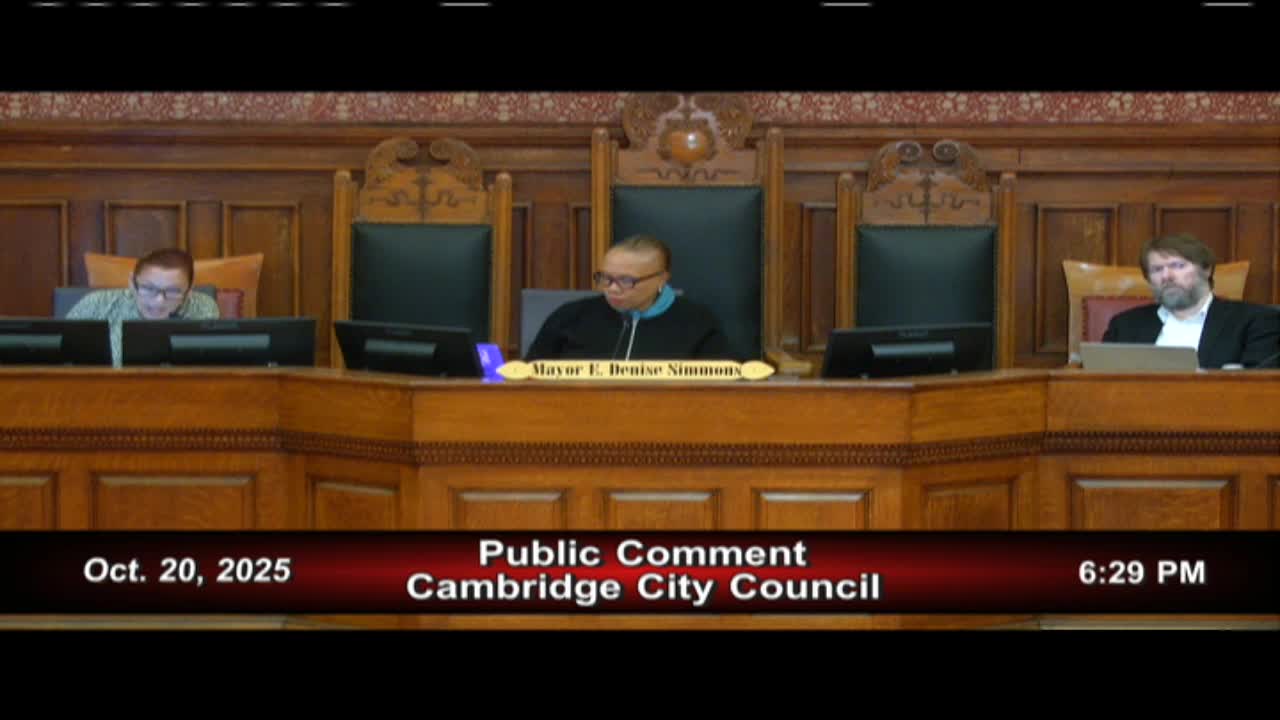
The Cambridge City Council on Oct. 20 adopted the FY2026 tax‑rate classification and related orders after a public hearing that drew business owners and residents opposing a sharp commercial tax‑rate increase. The council approved the tax rate and classification and set a 30% residential exemption for owner‑occupied homes.
What the council voted: The council approved the city manager’s recommended tax rate and the classification orders by roll call. The tax‑rate package passed on a recorded vote: the tax rate itself was approved by a 9‑0 vote. The council adopted an order setting a minimum residential factor (1a) and approved a 30% residential exemption for owner‑occupied homes (1b) by recorded votes, each receiving 9 affirmative votes. Councilors later voted to place the matters on file.
Public comment and concerns: More than 40 people signed up for the citywide public comment that included lengthy testimony from small‑business representatives and business associations opposing a proposed 22% increase in the commercial rate for FY26. Karen Kelly of Cambridge Local First and Denise Jillson of the Harvard Square Business Association urged delay or additional analysis of economic impacts and asked the council to examine exemptions or targeted relief for small commercial properties. Speakers argued the increase disproportionately burdens small, locally owned businesses and requested a state small‑business exemption be considered.
City staff explanation: City staff (Assistant City Manager Claire Spinner, Director of Assessing Gail Willett and Budget Director Todd Jennings) reiterated that the tax‑rate outcome results from the levy amount the council set when it adopted the budget and from changes in property valuations—particularly falling office and lab valuations that altered the distribution between commercial and residential classes. Staff noted the operating budget growth for FY26 was restrained (3.8%) compared with prior years, but assessed values' movements required the larger rate shift to generate the levy adopted in June.
Why this matters: Councilors and staff said the structural pressures—commercial valuation declines, rising fixed obligations and prior capital commitments—constrain near‑term options. Staff noted legal limits on setting different tax rates for properties based on business size (state law governs classification), and city leaders said next year’s budget process will need to scrutinize operating growth to avoid similar large rate shifts.
Ending: The council adjourned the tax classification hearing after approving the orders. Council members urged continued engagement with business groups during the FY27 budget process and stressed the need for public education about budget mechanics and trade‑offs.