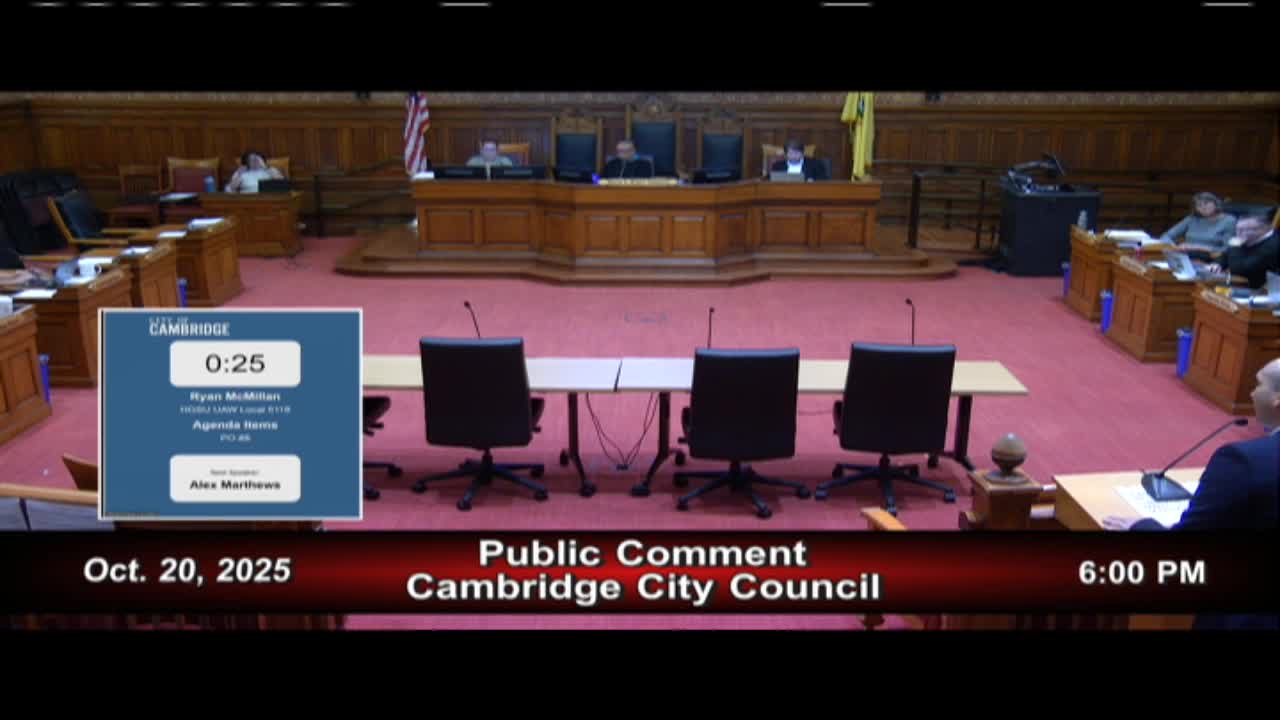
Council halts use of Flock license‑plate readers pending public‑safety committee review after weeks of public concern
Loading...
Summary
After extensive public comment raising privacy and data‑sharing concerns, the Cambridge City Council ordered suspension of Flock Safety license‑plate reader use and referred further review to the Public Safety Committee, asking staff to work with civil‑liberties groups during the review.
The Cambridge City Council on Oct. 20 voted to suspend use of Flock Safety automated license‑plate readers (ALPRs) and to send the matter to the council’s Public Safety Committee for further review after wide public comment and multiple questions about the vendor’s data‑sharing practices.
What the council did: By unanimous recorded vote the council amended and adopted a policy order directing the city to “suspend using Flock cameras and all ALPR technology currently in use until the city council votes whether to allow such devices,” and referred the broader issue to the Public Safety Committee for detailed review. The vote followed testimony from residents, privacy advocates and civil‑liberties organizations urging the city to halt the program and seek more transparency.
Why it matters: Public speakers and organizations including the ACLU and researchers argued that Flock’s nationwide data network enables out‑of‑state law‑enforcement and federal agencies to query local plate data and that contractual promises to restrict sharing can be ineffective or circumvented. Gideon Epstein of the ACLU’s Technology for Liberty program cautioned about “unrestricted data sharing” and urged public audits and transparency reports. Several public speakers connected that risk to immigration and reproductive‑health enforcement concerns.
What councilors and police said: Police leadership defended the department’s pilot and said a written policy was in place to limit searches and preserve shield‑law protections; Commissioner Elou and deputy superintendents told council members the department designed policy safeguards and had discussed them with Flock. Still, several councilors said the vendor’s record raised specific questions and recommended deeper review, including public release of the contract and audits of access logs.
Next steps and safeguards requested: Council action referred the matter to the Public Safety Committee and asked city staff to present: the full contract with Flock; technical details on where data are stored and who can access it; audit logs or audit plan; and any alternative vendors or on‑premises configurations that limit external queries. The council also adopted amended language suspending ALPR use until the council votes again on the matter.
Ending: The decision keeps the cameras physically installed in place but directs law enforcement to cease using ALPR searches pending committee review and further council action. Committee staff and interested civil‑liberties groups are expected to participate in the scheduled review.