
Cambridge speakers urge city council to back Harvard grad students after university carves out workers from union
Get AI-powered insights, summaries, and transcripts
Subscribe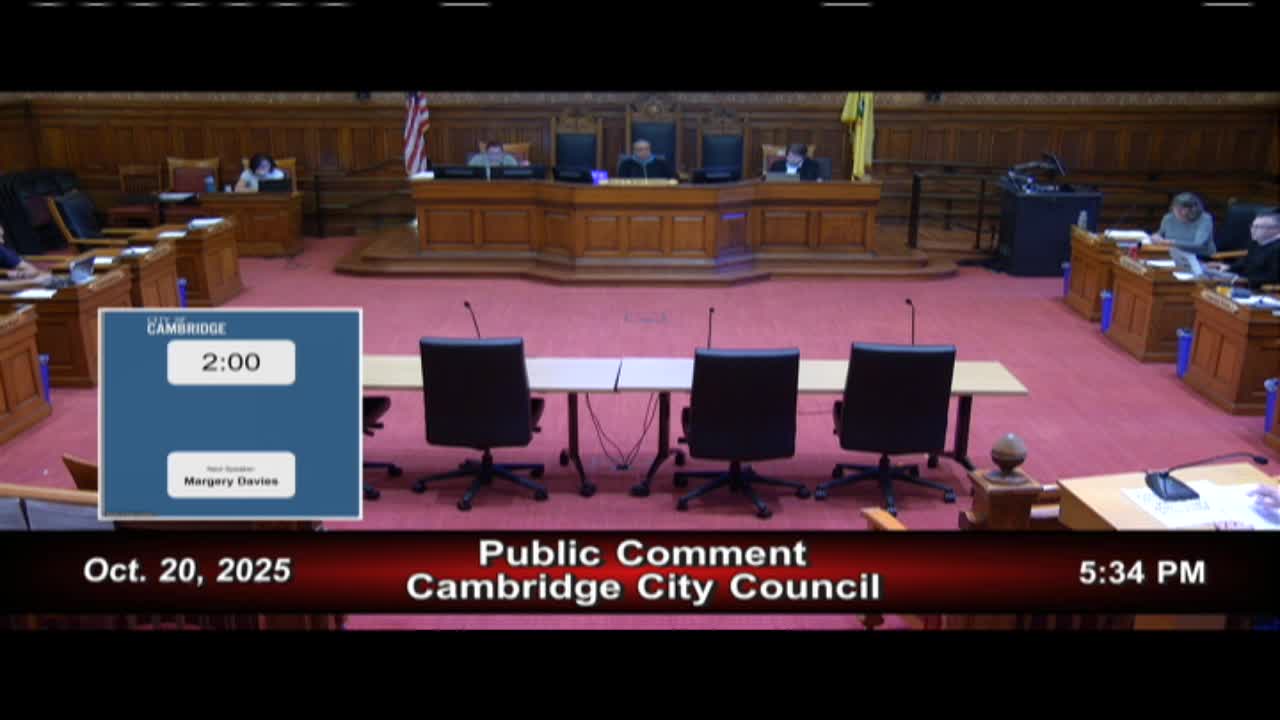
Summary
Dozens of Harvard graduate students and supporters spoke at the Cambridge City Council on Oct. 20 urging the council to adopt a resolution backing the Harvard Graduate Students Union after the university reclassified many stipended researchers as non‑employees, cutting them off from union benefits and funds.
Dozens of graduate students and union supporters addressed the Cambridge City Council during public comment on Oct. 20 to urge the council to adopt a resolution backing the Harvard Graduate Students Union after Harvard reclassified hundreds of stipended researchers as non‑employees.
Speakers said the university’s July decision—announced without advance notice—stripped graduate student researchers of union eligibility and access to benefit funds that cover childcare, emergency medical costs and other supports. “Harvard stripped hundreds of my colleagues of union protections overnight without notice or consultation,” said Laura Chen, identifying herself as “a steward of the union at the Harvard School of Public Health.”
Why it matters: Testimony described concrete financial effects—loss of dental and mental‑health reimbursements, emergency benefit access and childcare subsidies—that speakers said threaten students’ ability to continue their programs and the research Harvard relies on. Multiple speakers noted that the change took effect at the start of Harvard’s fiscal year and followed a large endowment return, framing the move as a unilateral employer decision rather than a change in worker duties.
Speakers and evidence: Multiple PhD students from Harvard’s arts and sciences, public health and biomedical programs testified with personal examples. Nick Burke said that a fellowship reclassification left his partner temporarily uninsured; Alex Matthews described losing access to benefit funds that cover thousands in childcare costs; Rachita Biles and others said the move undermines students seeking stability amid federal funding pressures. Evan McKay (former president, Harvard Grad Students Union) and allied union leaders urged the council to send a message to the university in support of collective bargaining rights.
Council action and context: Members of the public asked the council to endorse policy order 8 listed on the council’s agenda, a resolution supporting the union’s opposition to the carve‑outs. Policy orders were taken later in the meeting; the council adopted a package of policy orders (1–8) by a 6–3 vote. The public comment record and council action mean the council formally considered the request before the meeting ended.
What was not resolved: The council did not direct city staff to compel action by Harvard; the university’s employment classification is outside municipal authority. Speakers suggested the council’s endorsement would be a political and moral statement in support of workers’ bargaining rights.
Ending: The public comment period on Oct. 20 included extended testimony from graduate students, union organizers and allies asking Cambridge to back students affected by the carve‑out. The council’s later adoption of several policy orders means the issue will remain on the public record as students press Harvard for reinstatement of bargaining‑unit status and benefit access.