
San Marcos OKs conceptual planning deal with local developer to explore downtown city hall and mixed-use redevelopment
Get AI-powered insights, summaries, and transcripts
Subscribe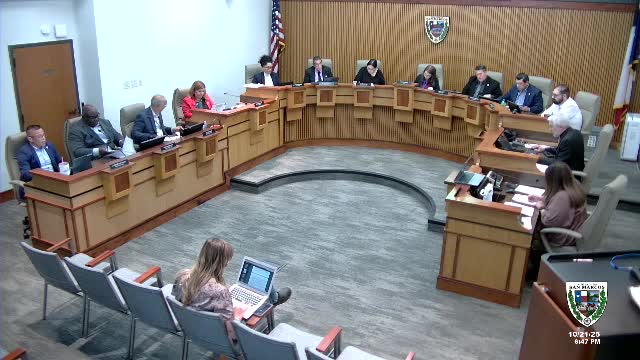
Summary
Council approved a conceptual planning agreement with Upward Communities to study a multi-phase Hopkins Street redevelopment that could include a downtown city hall, parking garage and mixed-use elements. The council authorized a conceptual agreement not to exceed $767,970, with funding drawn from previously set-aside city hall funds.
The San Marcos City Council on Oct. 21 approved a conceptual planning agreement with Upward Communities to evaluate a downtown redevelopment centered on Hopkins Street that would include a new city hall and potential public-private partnerships. The resolution authorizes up to $767,970 for conceptual planning; council approved the item 7-0.
The agreement directs the developer and city staff to advance site due diligence, feasibility and conceptual design and to explore financing options for a project that could include a new city hall, parking, and market, conference or hotel uses. City staff said funding for the planning phase would come from funds council previously set aside for a new city hall.
Hayden Migel, director of administrative services, said the current administrative building is about 50 years old, has structural and maintenance issues and is spread across multiple sites. Migel summarized earlier steps in the city's city-hall planning process, including the appointment of a citizens advisory committee (Nov. 2024) and the hiring of consultants Economic and Planning Systems with subconsultants Freese and Nichols and McKenna Adams Studio.
Keely Henig of Upward Communities presented the developer's concept, describing a multi-phase mixed-use project along Hopkins Street intended to activate downtown and complement existing venues. Henig said the team grew up locally and that the concept responds to the city's Downtown Area Plan (2023) and the Arts Master Plan update (2022). The presentation listed possible components including a parking garage, open-air market, conference space and a downtown hotel as avenues to increase visitor traffic and event space downtown.
Council members asked technical and planning questions: whether a downtown site would increase impervious cover (presentation said the proposed city-hall site is currently a parking lot and the developer's concept could reduce impervious cover), how elevation differences and alley/road alignments would be addressed, and how existing property owners would be approached. Henig said letters of intent to purchase had been sent to Bank of America and Wells Fargo, and that options for the historic "old bridal hardware" building were being considered with the historic preservation commission noted as a stakeholder.
Migel emphasized that the item before council was a conceptual planning agreement only; a separate predevelopment agreement would be required before moving further. The motion to approve the conceptual planning agreement was made by Councilmember Scott and seconded by Councilmember Mendoza; it passed 7-0.
Councilmembers and staff said the project could reduce long-term taxpayer burden by monetizing city-owned downtown property and activating the civic corridor, but that financing and design would be developed in later phases. Staff listed next steps including property procurement, site due diligence, traffic and watershed analyses, community engagement and further steering-committee meetings.