Get Full Government Meeting Transcripts, Videos, & Alerts Forever!
Get email alerts on the Historic Preservation topic
No spam. Unsubscribe anytime.
San Marcos unveils first citywide historic preservation plan, seeks public feedback before January hearing
Summary
City staff and consultant presented a draft historic preservation plan at an Oct. 21 work session, outlining five focus areas, outreach results and a timeline that includes a Jan. 20 public hearing and a Feb. 3 resolution; the project is partially funded by a $5,000 National Trust matching grant and staff requested feedback by Nov. 12.
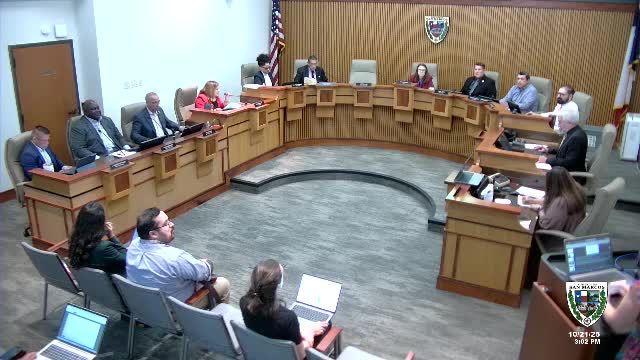
San Marcos staff and a consultant presented the city’s first comprehensive historic preservation plan during a City Council work session on Oct. 21, outlining recommendations, outreach results and a timeline for adoption.
Historic Preservation Officer Lisonbee Brake, the project manager, told the council the plan compiles stakeholder interviews, two open houses, pop-up events and a community survey that generated 426 responses and more than 300 public comments, and said the effort is intended to guide future preservation policy rather than mandate specific actions. "I think that this plan is the tool that will help guide us to that," Brake said.
The draft plan, prepared by Stantec Consulting Services Inc., organizes recommendations into five focus areas — administration; survey and recognition; economic development; signage and wayfinding; and engagement and education — and includes an implementation matrix to track progress. Key findings presented to the council noted that many properties meeting the standard 50-year age criterion remain unsurveyed and that most locally designated districts are predominantly residential and therefore ineligible for many state and federal tax-credit programs. The plan also highlights the city’s 2021 adoption of the International Existing Building Code as easing adaptive reuse of older buildings.
Brake said funding for the project is primarily from the city’s Capital Improvements Plan and that the city received a $5,000 matching grant from the National Trust for Historic Preservation; one condition of that grant is that the preservation plan be formally adopted by February. "The city was awarded a $5,000 matching grant from the National Trust for Historic Preservation," Brake said.
Councilmembers asked for clarifications and additions. The presiding officer praised the document’s readability: "The document is... it's just easy read, and it's just beautiful," she said. Councilmember Rodriguez asked the staff to ensure local partners and historically important individuals are named in the plan, citing the Indigenous Cultures Institute and the five Black women who desegregated Texas State, and requested their names be included where appropriate: "I just wanted to make sure that we incorporated their names onto the actual plan." Brake and the Stantec representative said the plan can be updated to include additional language about urban renewal and references to discriminatory lending practices where the historical record supports it and that staff can elevate those findings within the document.
Brake described outreach methods and results in detail: the survey was made available in English and Spanish, hard copies were distributed at the Planning and Development Services office, the activity center and the public library, and two workshops drew 89 attendees and produced 313 comments. She also noted that comments collected during the draft review included 210 public comments and 179 comments from the Historic Preservation Commission steering committee.
Staff asked the council and community to submit any additional substantive comments no later than Nov. 12 so that revisions can be incorporated before the Historic Preservation Commission reviews the final draft Dec. 4 and the Planning and Zoning Commission considers it later in December; staff anticipates a City Council public hearing on Jan. 20 and a resolution with action on Feb. 3. The plan and its outreach materials are available online at sanmarcostx.gov/hpp.
The presentation included case studies and implementation ideas such as thematic context statements, partnerships to pursue cultural district designation through the Texas Commission on the Arts, bilingual wayfinding and potential local incentives to help longtime homeowners preserve family properties. Brake emphasized that some solutions would likely increase staff workload and recommended exploring additional staffing and community-based recruitment to diversify commission membership.
The presentation was informational; no formal council action was taken on the plan at the work session. Staff requested substantive feedback by Nov. 12 and outlined the steps toward formal consideration early next year.