
Manchester planning board keeps Dunkin’ drive‑through plan open while staff, developer work on design and traffic details
Get AI-powered insights, summaries, and transcripts
Subscribe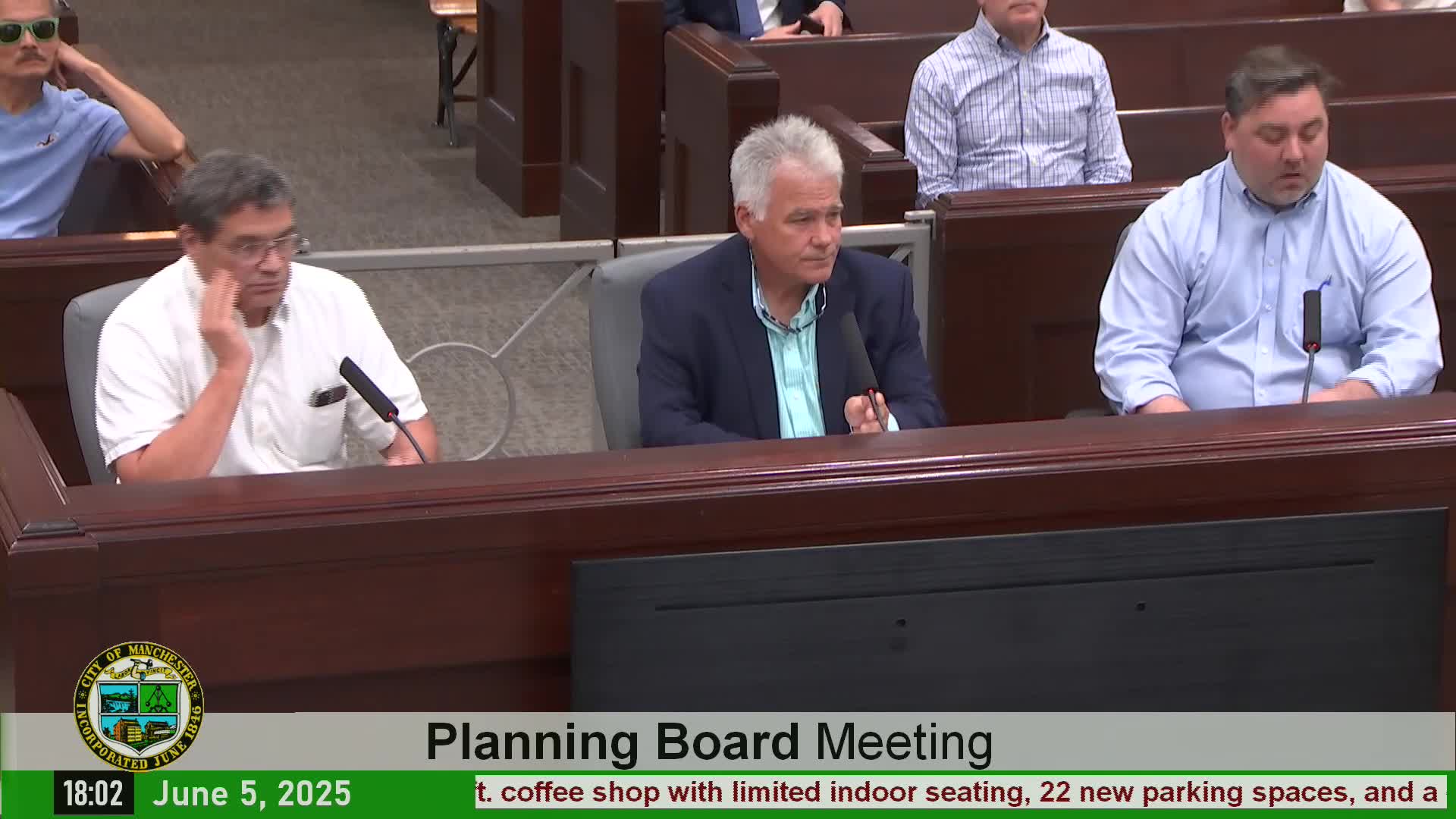
Summary
The Manchester Planning & Zoning Board continued the public hearing for PDSP2025‑002, a proposed 1,815 sq ft Dunkin’ with single‑lane drive‑through at 1895 South Willow St., and asked the applicant to finalize pedestrian, landscape and DPW drainage/striping details before a business‑meeting vote.
The Manchester Planning & Zoning Board on April 3 kept PDSP2025‑002, a planned development and site plan for a proposed Dunkin’ Donuts at 1895 South Willow Street, open for two weeks so staff and the applicant can finalize engineering and design items.
The application, presented by attorney John Cronin and civil engineers from TF Moran, proposes a roughly 1,815‑square‑foot coffee shop with limited indoor seating, a single‑lane drive‑through, 22 new parking spaces and pedestrian connections adjacent to a new Service Credit Union branch in the city’s B‑2 general business district. Cronin said, “Dunkin’ Donuts is under agreement with this particular parcel for the plan that’s been designed.”
Board members and staff focused discussion on three clusters of issues: traffic and driveway access, pedestrian connections and architecture/streetscape. Traffic consultant Bob Duvel of TF Moran told the board his analysis showed the proposed use would generate a pronounced morning peak but that most customers are pass‑by traffic already on South Willow. Duvel said, “Dunkin’ Donuts of this type and size generates about a 155 trips in the morning,” and stressed most trips would be right‑turn movements. He added that left‑turn movements were limited in number and that available signal gaps on the corridor reduce observed delays.
Service Credit Union submitted a written objection, read into the record by the chair, saying a restriction or modification of the credit union’s approved South Willow access would be “unacceptable to us.” Michael Dvorak, SVP and CFO of Service Credit Union, wrote that the institution relied on the currently approved access when it proceeded with construction and opening plans.
Board members pressed the applicant on pedestrian safety and streetscape. TF Moran said the plans now include a striped crosswalk with an extended refuge/splitter island, added sidewalk connections to South Willow, a channelization striping revision to better guide right turns into the drive‑through, and additional landscaping in front of the building. The architect confirmed the corporate Dunkin’ color palette is gray but said the applicant will explore placing colorful panels or a mural on a more visible facade and will work with the signage staff about what is allowed.
Several board members asked the applicant to look at alternate ways to reduce left‑turn conflict, signage to encourage circulation to signalized intersections, a bike rack, and whether vertical granite curbing should be used near high‑traffic edges. Staff and the applicant agreed to continue coordination with DPW and other departments to resolve outstanding technical comments.
The board voted to keep the public hearing open and scheduled the application for the next meeting (a business meeting on June 18, changed from the usual third‑Thursday date because of an observed holiday). The applicant said representatives will return for that session.
The board did not take a final vote on the plan during the April 3 hearing; instead members asked the applicant to complete DPW coordination, finalize curb/striping and lighting details, and return with updated materials for a final vote.
What happens next: The applicant will work with planning staff and DPW to resolve drainage, curb and signage comments, refine landscaping and demonstrate final pedestrian and bike accommodations. The board set a date certain to continue the hearing at the June 18 meeting.