Get Full Government Meeting Transcripts, Videos, & Alerts Forever!
Get email alerts on the Charter Review topic
No spam. Unsubscribe anytime.
Boynton Beach charter review committee recommends preamble, residency and term changes; commission to consider ordinances in November
Summary
The city's Charter Review Committee presented five priority proposals including a preamble, candidate residency and qualifications, four-year terms, and language modernization. The city commission will receive proposed ordinances for first reading in November and voters would decide any charter amendments at referendum.
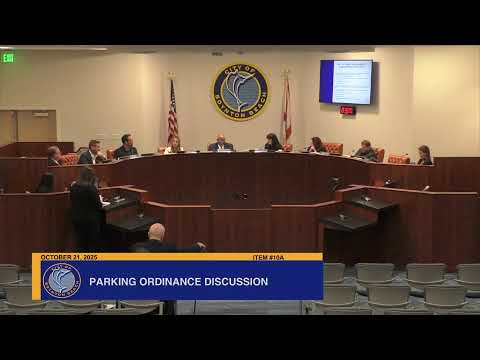
The Charter Review Committee presented its final report to the City of Boynton Beach City Commission on Oct. 21, recommending five priority amendments to the city charter and asking the commission to consider ordinances for first reading in early November.
The committee, chaired by former Mayor Jerry Taylor, recommended adding a preamble; clarifying candidate qualifications including a continuous one-year residency requirement before filing; lengthening elected terms from three to four years; reaffirming the current council-manager form of government; and modernizing gendered language in the charter. "The citizens of the city of Boynton Beach, in order to protect the general health, welfare, and safety of its residents, promote honest, efficient, and responsive government, hereby adopt and revise a city charter in accordance with the constitution and statutes of the State of Florida," Taylor read as the committee's proposed preamble.
Why it matters: Charter changes require both ordinance readings by the commission and voter approval at referendum. Staff told commissioners the proposed ordinances must be passed on first and second reading at the November meetings to reach the ballot timetable the committee seeks.
Committee deliberations and key details
- Residency and age: The committee recommended a continuous one-year residency requirement for candidates before filing to run. Vice Chair David Katz and others said they preferred keeping the minimum age to run at 21, citing the long history of that standard; Katz said the committee voted 4-1 to keep the age at 21. Some commissioners and members of the public argued for raising the eligibility age to 25; proponents cited maturity and the scale of municipal budgets.
- Term length and limits: The committee recommended moving from three-year to four-year terms for commissioners and the mayor to give newly elected officials more time to advance initiatives and to reduce election frequency and costs.
- Form of government and removal thresholds: The report clarifies that Boynton Beach operates under a council-manager form of government and recommends wording that specifies a supermajority (four of five commissioners) to hire or fire the city manager or city attorney.
- Language modernization: The committee recommended replacing gendered pronouns in charter language and updating outdated phrasing throughout the document.
Process and next steps
The committee's chair and vice chair told the commission they plan to present proposed ordinance language at the commission's first November meeting; staff confirmed the ordinance must receive first and second reading in November to meet the committee's targeted schedule for a referendum. The City Attorney's office drafted the proposals and will present the code and ballot language to the commission.
Public input and commission remarks
Committee members and several commissioners thanked the volunteers and legal staff for the work. Commissioners urged colleagues to review the committee's full report, which staff said is attached to the meeting backup and was also emailed to commissioners. Vice Mayor Hay and others emphasized that the ultimate decision on charter amendments rests with voters, not the commission.
What the commission did: No ordinance votes were held on Oct. 21. The commission directed staff to place the proposed charter ordinances on the November meeting agenda for first reading so the November meetings can cover first and second reading if the schedule allows.
Looking ahead: If the commission passes ordinance language in November, the proposed changes would proceed to referendum for voters to accept or reject.