Community advocates warn Atlanta City Council that TAD expansion could displace long-term residents
Loading...
Summary
Public commenters raised concerns about Invest Atlanta's proposed tax allocation district (TAD) expansion and a $15 billion reinvestment proposal, saying current TAD practices favor developers and risk displacing low-income residents and failing to preserve deeply affordable housing.
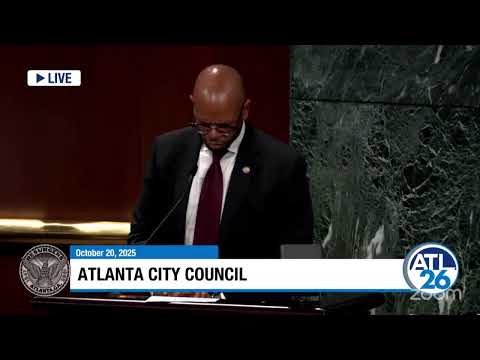
Multiple speakers urged Atlanta City Council on Oct. 20 to scrutinize proposed tax allocation district (TAD) expansions and large redevelopment plans that advocates said could displace low-income and long-term residents.
Why it matters: Tax allocation districts steer future property tax increments to economic projects in defined areas; expansion can change neighborhood demographics, housing affordability and school funding.
What was said
- Rodney Mullins and other advocates said an Invest Atlanta plan tied to a proposed expansion and a quoted $15 billion reinvestment would likely increase speculation and displacement if the city does not change how TAD funds are allocated. Mullins said much TAD-supported housing is not reserved for households below 50% of area median income (AMI) and that the methodology should use neighborhood median income (NMI) instead of a citywide AMI that inflates affordability targets.
- Mullins and other speakers told councilmembers of historical examples, such as Overlook Apartments and other neighborhoods they said were effectively removed rather than renewed, warning that current Invest Atlanta policies lack sufficient safeguards including clear metrics, anti-displacement protections and obligations for developers to reserve deeply affordable units.
- Speakers asked the council to prioritize preservation-focused funding, use NMI or other localized metrics, and require transparency about how bond and TAD increments have been spent to date so neighborhoods can be protected as projects proceed.
Council response
Councilmembers did not take immediate legislative action during the Oct. 20 meeting but several acknowledged the risks and asked for clearer reporting on TAD revenues, uses and safeguards. Councilmembers emphasized that community input and stronger affordable-housing preservation rules would be necessary before approving major fund reallocations.
Ending
Advocates requested that the council delay or condition any major TAD expansions until the city adopts stronger anti-displacement measures, localized income measures and transparent reporting on past TAD and bond fund usage.