
Heritage Commission approves Pulaski Park historic‑district survey; discusses rededication, clerk appointment and local projects
Get AI-powered insights, summaries, and transcripts
Subscribe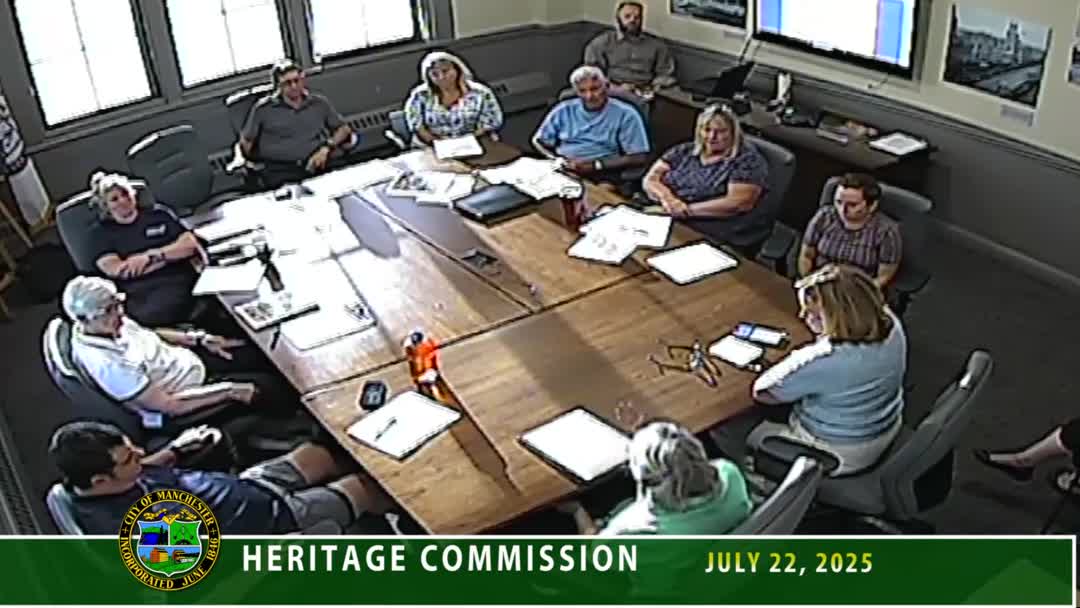
Summary
The Manchester Heritage Commission voted to approve a draft district-area survey for the Pulaski Park area and discussed next steps for state and national review and a possible rededication tied to national commemorations.
The Manchester Heritage Commission voted to approve a draft district-area survey for the Pulaski Park area and discussed next steps for seeking state and potentially national recognition.
Commissioners voted to send the Pulaski Park district-area form, prepared by agricultural historian Lisa Mansoff, on to the New Hampshire Division of Historical Resources for review. The form documents buildings, monuments and landscape features in and around Pulaski Park; commissioners said the submission could support state and National Register consideration and provide an organizing point for a park rededication next year tied to broader commemorations.
“Once that’s done, you’ll see an option to recommend the state registrar or national register,” a commissioner explained during the meeting. Commission members and representatives of the Manchester Garden Club described recent and planned plantings, stone‑planter repairs and possible signage funded by city capital-improvement allocations.
The commission discussed using next year’s Semiquincentennial (U.S. 250th) events as an occasion for a Pulaski Park rededication. Aurora Eaton, a former commission member and longtime historic-association director, said the timing would raise the profile for Pulaski Park and help attract volunteers and donors. Members noted ongoing maintenance needs for the Pulaski Monument and opportunities to coordinate with local groups and Polish cultural organizations.
Formal action and clerk appointment
The commission recorded a motion and second to approve the district-area survey and members verbally affirmed approval. Commissioners then moved to appoint a clerk to take meeting minutes; Daryl Johnston volunteered and offered to prepare meeting notes in a nonverbatim format. The commission accepted that volunteer and confirmed arrangements.
Other business and planning-board items
Commissioners heard updates on other local preservation matters. Staff and members discussed a pending Planning Board application for façade and interior changes at 944 Central (a second‑story conversion into six residential units with front‑window replacements) and the ongoing Hall School redevelopment proposal, which the commission described as a larger conversion to 35–40 residential units that would retain community amenities such as a gym and playground. Commissioners expressed support for saving the Hall School structure and noted its architectural features, murals and clock tower.
Members also raised a recurring concern about owners painting older brick and mill buildings very dark colors, sometimes without prior notice. Commissioners requested that the chair or staff prepare a letter expressing the Heritage Commission’s concern about historic brick façades being painted in ways that may reduce visible historic fabric, and agreed to circulate a draft for comment.
Ending
The commission closed the meeting after capturing the vote on the survey, confirming the clerk appointment and agreeing to follow up on signage and Pulaski Park rededication planning. Members asked staff to distribute the approved survey to the state’s Division of Historical Resources and to coordinate further outreach for the proposed rededication and site improvements.