
City commission overturns Planning & Zoning denial, approves variance to remove one sidewalk in Towngate
Get AI-powered insights, summaries, and transcripts
Subscribe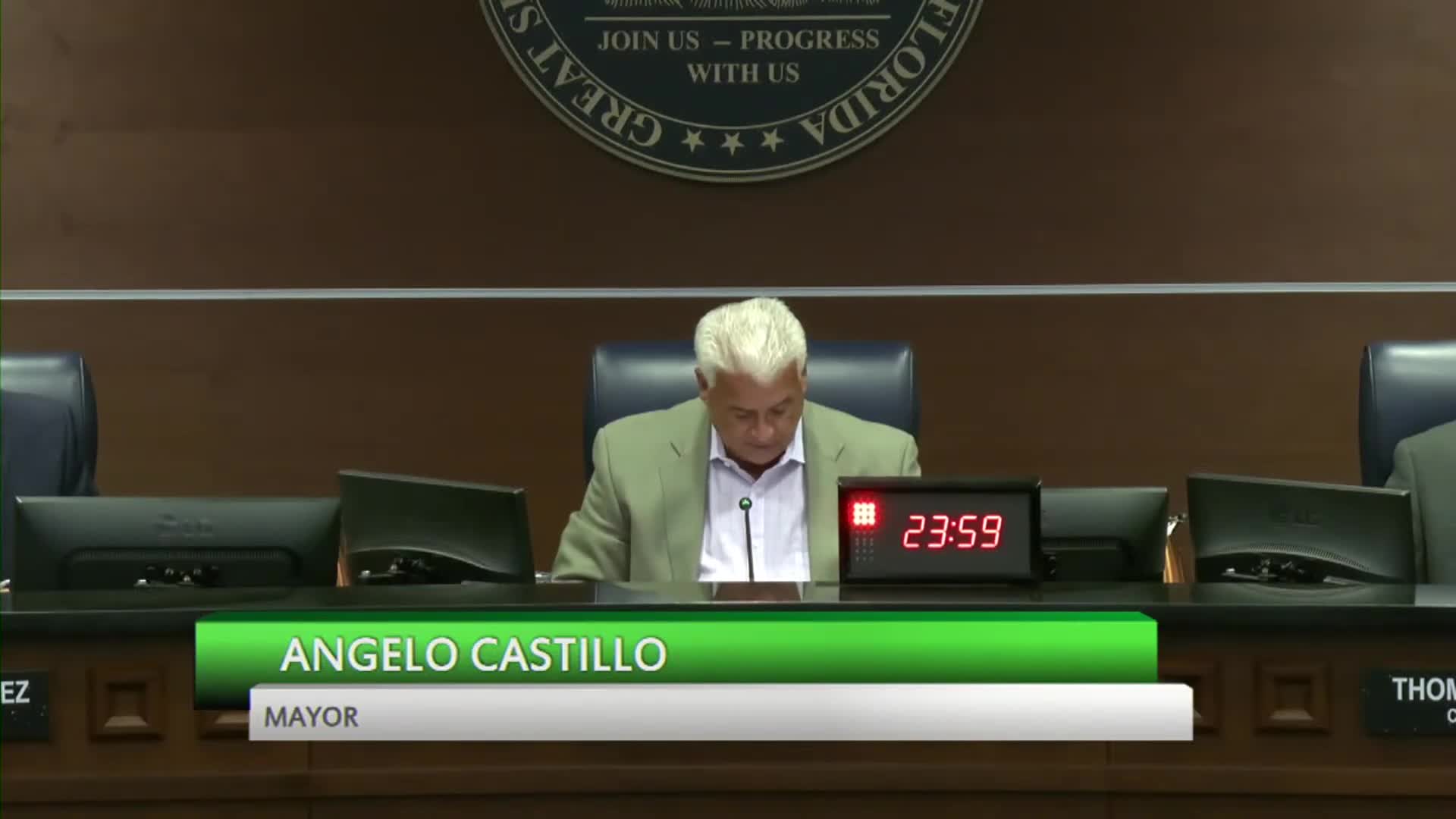
Summary
The commission reversed a Planning & Zoning Board denial and granted Towngate Master Association’s variance to remove a damaged north-side sidewalk on Cedar Way after hearing arborist testimony, cost estimates and community surveys; the vote was unanimous.
The Pembroke Pines City Commission voted to overturn a Planning & Zoning Board decision and granted a variance requested by the Towngate Master Association to remove an existing 4-foot sidewalk on the north side of Cedar Way, a private 40-foot roadway, instead of the PUD-required sidewalks on both sides.
The appeal (ZV2024-0008) came to the commission after the Planning & Zoning Board denied the variance by a 3–0 vote. At the City Commission hearing, Towngate’s counsel presented arborist findings that roots from mature mahogany trees have severely damaged the sidewalk and created ADA and trip hazards. Counsel said remediating the sidewalk would be temporary and more costly overall than removing the sidewalk and preserving the trees.
Attorney Jamie Cole told the commission that a certified arborist concluded the sidewalk needs removal, that removing the trees and replacing the sidewalk would cost about $300,000 (roughly $3,000 per unit for slightly more than 100 units), whereas removing the sidewalk and installing grass was estimated at about $40,000. Cole also said Towngate presented a resident survey indicating strong support from homeowners: he reported 91% support from Cedar Way respondents and 82% across Towngate at the May hearing. Later in the meeting Cole read a letter from Cedar Way’s board stating a post-hearing survey of 54 respondents showed about 74% support for the variance; the commission heard both figures and discussed timing and admissibility of the later survey.
Planning and zoning staff noted the governing Towngate PUD contains a specific requirement for sidewalks on both sides of a 40-foot private roadway; the variance sought relief from that PUD guideline. Staff also noted the appeal process is appellate in nature and generally limited to the record from the Planning & Zoning hearing; the commission accepted a proffer of a letter from Cedar Way’s board after legal counsel advised the commission it could consider a proffer though it would not be part of the lower-board evidence.
Commission discussion split. Commissioner Rodriguez (district commissioner) said she preferred returning the matter to the Planning & Zoning Board to allow the new information to be considered by that body. Commissioners Schwartz, Goode and Vice Mayor Hernandez argued the Planning & Zoning proceeding was not impartial, and that competent evidence (arborist report, cost estimates and resident support) was presented to support the variance; they favored deciding the appeal that night. Mayor Castillo expressed concern about precedent and suggested an amendment to the PUD might be the cleaner fix, but ultimately accepted the majority view.
Commissioner Schwartz moved to grant the variance; Commissioner Rodriguez seconded. The roll-call vote was recorded in favor and the commission approved the variance. The commission asked administration to work with the association on outstanding code-enforcement fines and to pursue mitigation under the established administrative process.
Key clarifying details presented at the hearing included: an arborist opinion that root pruning or barriers were not feasible; cost estimates presented by Towngate counsel ($300,000 to remove trees and replace sidewalk; $40,000 to remove sidewalk and install grass); and resident surveys and a Cedar Way board letter supplied after the P&Z hearing. Planning & Zoning review had been conducted with only three board members present for the hearing.
The commission’s approval overturned the Planning & Zoning Board denial and granted Towngate the requested variance for the affected segment of Cedar Way.