Get Full Government Meeting Transcripts, Videos, & Alerts Forever!
Get email alerts on the Open Meetings topic
No spam. Unsubscribe anytime.
City attorney briefs commission on open-meetings, executive-session and records rules
Summary
Canton’s contract city attorney reviewed statutory limits on public comment, the six categories that permit executive sessions, public-records obligations, and procedures for handling working-group reports and handouts.
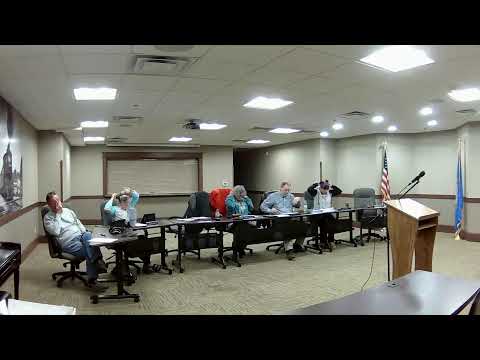
City Attorney Sam reviewed state open-meetings and records rules for the Canton City Commission, telling the commission which topics may be discussed in private and what the city must make available to the public.
Sam told the commission that the statute lists “an exhaustive list” of allowable executive-session topics and that “if it ain't on the list, you can't have an executive session meeting to discuss it.” He said discussion in executive session may include candid debate and legal consultation but that “what you cannot do is vote in executive session.”
The attorney walked commissioners through the numbered categories in the statute that permit private meetings, including personnel matters (qualifications, competence and fitness of officers and employees), legal consultations on proposed or pending litigation or contractual matters, preparation for contract negotiations and certain public-safety vulnerability or emergency-response information. He specifically cited cybersecurity plans, building blueprints and emergency protocols as examples of material that may justify executive session in limited circumstances.
Sam warned that violations of the open-meetings sections can be prosecuted as a class 2 misdemeanor and described the state process for complaints: a state's attorney may prosecute or refer an investigation to the South Dakota Open Meetings Commission, which is staffed by appointed state's attorneys.
On public records, Sam said materials provided to commissioners as part of an agenda packet generally must be made available to the public, unless they are expressly exempt (for example, confidential attorney-client memoranda). He told the commission that draft minutes must be retained and that draft minutes should be posted “within five business days after the meeting.” Sam also said the city’s agendas must be posted on its website and that a failure to post could prevent holding the meeting.
Sam advised prudence when the public hands out documents during public comment: while those items are not generated by the governing body, he recommended appending such handouts to the minutes and making them available with meeting records “out of an abundance of caution.” On voluminous or time-consuming public-records requests, Sam said the city may charge for staff time required to compile records and may require requesters to confirm they want the records if the staff time is extensive.
Commissioners asked about social media groups and quorum risks. Sam advised caution about coordinated comments by a quorum of commissioners in an online forum and said he would look further into the issue, noting it can be analogous to an email chain depending on how it is run.
Sam framed the annual review requirement as the reason for the briefing and invited commissioners to contact the city attorney’s office or “Andrew” for follow-up questions or clarifications.
The commission did not take formal action during the attorney’s presentation; Sam closed the presentation after taking questions.