Buncombe County health board highlights hurricane response and readies community for respiratory-virus season
Loading...
Summary
The Buncombe County Board of Health and Human Services reviewed its annual report, recounted post–Hurricane Helene recovery work and pilots, and heard a respiratory-virus season briefing stressing vaccination and monitoring of SNAP/WIC risks during a potential federal shutdown.
The Buncombe County Board of Health and Human Services presented its annual report and a respiratory-virus season update to the Buncombe County Board of Commissioners on the evening of Oct. 22.
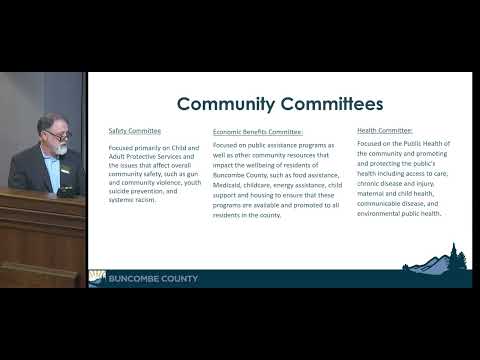
The Board of Health and Human Services, led this year by Board Chair Dr. Dan Frane, told commissioners the board stepped up after Hurricane Helene to help the agency provide services and enroll residents in D-SNAP benefits, and continued backing a harm-reduction and smoking-cessation pilot that showed promising initial results. "We are structured as a combined health and human services board," Frane said, adding the board had created focused committees to deepen its oversight and advice.
The report noted one statutory board seat remains open (the engineer position) and three community-at-large positions were also open; the board said three viable candidates will be presented to commissioners at an upcoming meeting.
Public health director Dr. Ellis Matheson briefed commissioners on expected respiratory-virus patterns for the coming months, saying COVID-19, influenza and respiratory syncytial virus (RSV) continue to circulate and that co-occurring peaks can strain hospitals. "Vaccines and other preventable actions keep us healthy and working and learning and playing," Matheson said. She reviewed last season's severe influenza figures — including 280 reported pediatric deaths nationally and 19 Buncombe County residents who died from flu-related illness, including one child — and urged vaccination for people at higher risk and those who want protection.
Matheson highlighted new RSV vaccines and monoclonal antibodies for infants and high-risk toddlers and noted that adults 60 and older and certain pregnant people are eligible under current recommendations. She also summarized COVID-19 vaccine guidance, saying updated vaccines target currently circulating variants and that people should consult a provider, pharmacist or county nurse about whether to receive immunization.
On federal-policy risks, David Sweat and Dr. Frane told commissioners the board is analyzing the local workload and fiscal impacts of recently enacted federal legislation referred to during the briefing and said staff will present more detail at the board's budget retreat in November. Sweat warned that USDA-funded programs such as WIC and SNAP are most at risk if a federal government shutdown continues past Oct. 31 and that benefit disruptions are possible: "We continue to monitor that situation, and we'll keep you apprised," he said.
Matheson emphasized practical protections: stay home when sick, wash hands, cover coughs and seek vaccination at pharmacies, community providers or the Buncombe County Immunization Clinic at 40 Cox Avenue (appointment or walk-in; phone (828) 250-5096).
Commissioners asked about historical interruptions to WIC/SNAP; officials said disruptions have occurred during past shutdowns and that counties await federal guidance on specific steps. The board identified priorities for 2025–26: support uninterrupted operations, strengthen preparedness based on lessons from Helene, and continue recovery efforts.
The presentation concluded with thanks from commissioners for the board's work and a reminder that officials will report back on federal funding and legislative impacts at the retreat in November.