
Carmel panel reviews draft forest-management plan, debates 35% canopy goal and wildfire steps
Get AI-powered insights, summaries, and transcripts
Sign Up Free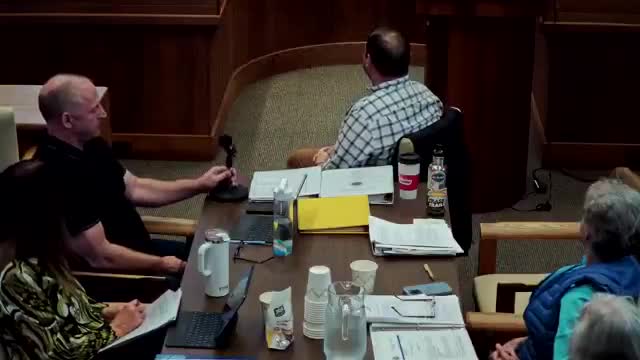
Summary
Consultant presentation and wide public comment framed a draft forest-management plan for Carmel-by-the-Sea that emphasizes conserving Monterey pine habitat, measurable canopy monitoring and integrating wildfire resilience; staff and residents pressed for clearer implementation, funding and staffing.
A city advisory group on Wednesday reviewed a draft forest-management plan that lays out goals on preserving the Monterey Peninsula’s pine forests, maintaining canopy cover, and integrating wildfire resilience into local policies.
Nikki, the ecological consultant who drafted material for the plan, told the steering committee that Monterey pine forests are unusually restricted and locally important, and that “Monterey pine forests are unique,” providing context for why the plan prioritizes native genetic stock and legacy groves. The meeting focused on how to translate scientific recommendations into measurable, funded actions that Carmel-by-the-Sea staff can implement.
The draft sets several headline objectives: proactively manage public trees and forest resources; maintain the city’s tree canopy (the Davie Tree inventory puts current coverage near 36% and the draft cites a 35% target); strengthen community stewardship and volunteer partnerships; align municipal codes and planning with habitat protection; and make wildfire preparedness and fuel management a core part of forest operations.
Why it matters: The Monterey Peninsula is described repeatedly in the presentation as a climate refugium — a place where coastal fog, soils and terraces let rare plants and trees persist. That ecological uniqueness underpins recommendations to favor native species and local genetic stock, to protect intact stands such as Mission Trail Nature Preserve and other legacy groves, and to prioritize understory restoration alongside tree planting.
Key discussion and public input
- Implementation, staffing and money. Justin, a city public-works/forestry staff member, pushed for a plan the department can carry out. “This plan has to be something I and Carmel by the Sea, Public Works can implement,” he said, and both staff and public questioned where funds and staff capacity will come from to water new plantings, enforce replanting requirements and manage fuels.
- Canopy target and measurement. The draft repeats a community-backed aim to maintain canopy near 35% (the consultant reported current canopy at about 36%). Several committee members and commenters urged caution before locking the percentage into policy and recommended clearer measurement cadence and methods; the group discussed doing canopy assessments every two to five years using aerial or satellite data and agreed to include measurable, short- and mid-term targets in the implementation program.
- Role of science versus format and community values. The Davie Tree Experts inventory produced the base data and a planting map; residents and the steering committee said portions of the Davie recommendations felt oriented to a conventional “urban forest” approach and not to Carmel’s historic “urbanized forest.” The committee asked the consultant’s ecological analysis be included as appendices, and several residents urged greater public review time for those materials.
- Wildfire resilience. The plan incorporates aims from the Community Wildfire Protection Plan (CWPP) and calls for mapped fuel-management zones in high-risk areas (for example, Mission Trail and Pescadero Canyon), annual fuel-load assessments and coordination with CAL FIRE and Monterey County Fire. Committee members supported stronger homeowner guidance on defensible space and infrastructure hardening but noted constraints (water supply, historic homes) and urged demonstration projects and grant-seeking to fund retrofits.
- Volunteer and interagency coordination. The draft recommends formal volunteer coordination and stronger partnerships with groups such as Friends of Carmel Forest and Carmel Cares, plus outreach to utilities and neighboring jurisdictions. Multiple speakers recommended creating a paid city position (part- or full-time) to manage grants, volunteer programs and interagency coordination.
Public comment and next steps
Dozens of residents spoke or asked questions. That public input highlighted four recurring points: make the document clearer and publishable as a draft for wider review; add measurable implementation targets and a timeline (1-, 3- and 5-year milestones); clarify how private-property replanting requirements will be enforced; and identify funding strategies and staffing to carry out canopy monitoring, planting and fuel management.
The steering committee agreed to revise the draft, add appendices with the consultant’s ecological background and the Davie inventory maps, and circulate an updated draft for review. Staff said they will add measurable metrics and a proposed cadence for canopy monitoring and return with an implementation-focused workshop within months rather than waiting longer.
Ending
The committee left the meeting with working agreements to refine the plan’s goals into measurable objectives, to fold the consultant’s scientific material into appendices, and to pursue staffing and grant options to move from policy to on-the-ground actions. The group emphasized that preserving the peninsula’s native Monterey pine habitat will require both science-based direction and practical, fundable steps that city staff can implement.