Get Full Government Meeting Transcripts, Videos, & Alerts Forever!
Get email alerts on the Gaslight Village Pud topic
No spam. Unsubscribe anytime.
East Grand Rapids residents urge more hearings, stricter review of Gaslight Village PUD
Summary
Dozens of residents urged the East Grand Rapids City Commission for more transparency, additional public hearings and tighter review criteria for a proposed Gaslight Village Planned Unit Development (PUD). Commissioners described the concept-plan step as high-level and said detailed studies would come later.
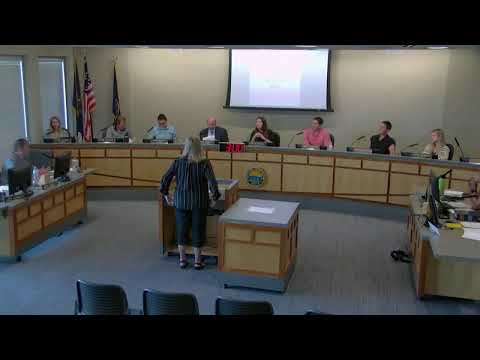
Dozens of residents told the East Grand Rapids City Commission on the evening’s public-comment period that the proposed Gaslight Village Planned Unit Development threatens the community’s character, parking and green space and requires more public hearings and clearer communication from city officials.
The speakers — many of them longtime residents — asked the commission to slow the process, schedule additional public hearings and press the developer for clearer commitments on parking, density, green space and traffic mitigation. "You're gonna be in a 70 foot canyon," warned Jerry Anderson, a resident of 435 Edgemere Drive Southeast, describing how surrounding buildings and parking could feel to neighbors. Judith Baxter, who said she has spoken previously about the development, asked the commission to hold another public hearing in September and called current outreach "not effective communication." "We have asked repeatedly for a public hearing," Baxter said.
Why it matters: The commission must decide whether to amend the city’s zoning by approving a concept plan for a discretionary PUD. Approving a concept plan does not immediately authorize construction, but residents and commentators said concept approval can feel final and gives developers momentum. Nile Deem, a resident, stressed the legal stakes: "The PUD is discretionary. There's nothing that says you have to approve it," and warned that a conceptual approval can create legal disputes over what constitutes "reasonable assurance" to a developer.
Commissioners acknowledged public concern and described the concept-plan stage as an early, high-level decision that would be followed by required studies. Commissioner Skaggs said concept approval signals general support but that "now spend some of your money to go and and get those studies done" — referring to traffic, soils and other detailed reviews that determine final site layout, unit mix and parking counts. Several commissioners asked for patience and engagement while the planning commission and staff complete subsequent technical reviews.
Residents highlighted specific concerns that they said have not been answered or made transparent: whether the developer will maintain public parking promised in 2004, how the project will affect traffic near schools, how much green space will remain, and whether the concept plan locks in building massing that will change neighborhood character. David Decker (925 Belclaire Avenue, Ward 1) pressed the commission on the developer’s 2004 parking commitment and sought a path to "balanced and fair" on-street and on-site parking.
Legal and process context: Multiple speakers reminded the commission that PUD approval is discretionary under the city's ordinance and that the commission's role at the concept stage is to judge whether the proposal meets the zoning standards and is not detrimental to adjacent properties. Residents and at least one speaker referenced an ongoing lawsuit related to a similar project, noting litigation risks if concept approvals are treated as final permissions.
Next steps: Commissioners said the process will continue with technical studies and planning commission review if a concept plan is approved. Several commissioners voiced willingness to speak individually with residents and to hold further public engagement. No formal vote on the PUD concept plan took place during the meeting.
The meeting’s public-comment portion and subsequent commissioner remarks illustrated deep resident concern about transparency, communications and the long-term character of East Grand Rapids as officials weigh discretionary zoning changes.