
Residents urge Manchester to add PFAS limits to sewer‑use ordinance; board received multiple public comments
Get AI-powered insights, summaries, and transcripts
Subscribe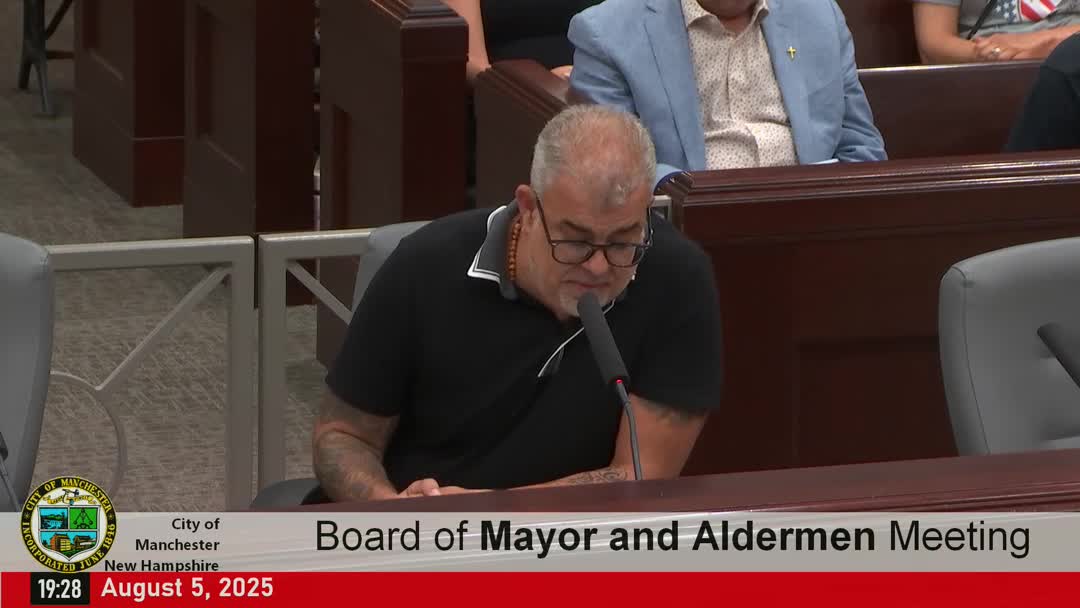
Summary
At the Manchester Board meeting, multiple residents and advocacy groups urged aldermen to use state authority to add PFAS limits to the city's sewer‑use ordinance to reduce releases from industrial users into the wastewater treatment plant and sludge incinerator.
Multiple Manchester residents and local advocates used the public comment period on July 21 to press the Board of Mayor and Aldermen to amend the city’s sewer‑use ordinance to limit PFAS discharges by industrial users.
Speakers including Anthony Poor, Shirley Tomlinson, Jose Tapia and others asked the board to act, citing health concerns and recent studies showing widespread PFAS contamination in New England groundwater. Several speakers referenced state law as authority for municipal action.
Key points raised by speakers
- Health and exposure concerns: Speakers said PFAS — sometimes called “forever chemicals” — are linked to cancer, reproductive harm and other health risks. Shirley Tomlinson said residents near the wastewater and incinerator sites live within a few miles of potential emissions and expressed fears for family members.
- Pathway and local controls: Speakers noted Manchester’s wastewater treatment plant receives wastewater from numerous industrial users and does not remove PFAS. Several urged the board to add PFAS to the city’s sewer‑use ordinance so the city can require industrial pretreatment or limits and thereby reduce PFAS loadings to the plant and downstream releases.
- Legal authority: Anthony Poor said he had circulated a draft ordinance and argued the New Hampshire legislature specifically granted Manchester authority through RSA 45‑a (cited in his remarks) to address local water‑quality matters; he said the draft ordinance had support from local organizations and legal advice.
Board response
The board did not take formal action on PFAS at the July 21 meeting. Several aldermen and the mayor acknowledged the public concern and indicated they would review the petitions and the draft ordinance language. One speaker submitted a petition with more than 170 resident signatures to the clerk during remarks.
Background and next steps
Residents and advocates asked for a clear next step: drafting a proposed amendment to the sewer‑use ordinance, a staff memo on potential economic impacts to local industrial users, and legal review. The speakers encouraged the mayor and aldermen to convene staff from the utilities, legal and health departments to craft an ordinance that uses municipal authority to reduce PFAS before it reaches the treatment plant.